
A Powerful Classic on Beauty, Desire and Moral Decay
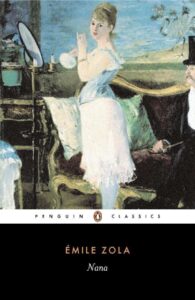
English | 200 pages
Review by Pushpa Rathi
Émile Zola’s Nana is not just the story of a courtesan. It is a powerful portrait of a society drowning in excess, vanity, lust, and moral decay. Written with extraordinary realism and emotional depth, the novel takes the reader into the glittering but deeply corrupt world of Parisian high society during the French Second Empire.
What makes this novel unforgettable is the way Zola combines personal tragedy with social criticism. While reading the book, one can almost see the theatres, lavish drawing rooms, horse races, expensive dinners, and crowded Parisian streets. Zola’s writing is so vivid that every scene comes alive before the reader.
The Enigmatic Nana
Nana Coupeau is a young woman who rises from poverty to become one of the most desired courtesans in Paris. She first appears in a theatre performance where, despite her lack of acting talent, her beauty and sensual charm completely mesmerize the audience. Zola beautifully captures the strange power she holds over people around her.
Nana is beautiful, extravagant, impulsive, and emotionally unpredictable. Men fall hopelessly in love with her, often ruining themselves in the process. Yet beneath all the glamour lies emptiness and restlessness. She has a frail little son who is mostly cared for by her aunt while Nana herself moves from one luxurious relationship to another.
Zola describes her almost as a force of destruction:
“She ruined everything she touched.”
That single line captures the essence of Nana’s character.
Men Under Her Spell
Among Nana’s many admirers, Count Muffat stands out the most. A respectable aristocrat, he becomes completely obsessed with her. Even when she humiliates him repeatedly and tells him bluntly about his wife’s affair with a journalist, he cannot stay away from her.
Another young admirer, Georges Hugon, becomes so heartbroken by Nana’s indifference that he attempts suicide at her doorstep. Several men spend fortunes on her, sacrificing their dignity, careers, and families just to remain close to her.
At one stage in her life, Nana begins living with Fontan, a cruel and abusive man who beats and humiliates her. Reduced financially and emotionally, she is forced into even deeper degradation. Ironically, it is Count Muffat, the very man she has emotionally destroyed, who comes to her rescue once again.
Yet Nana herself is not entirely in control of her life. She spends recklessly, trusts the wrong people, and is constantly cheated by servants and companions. Zola does not portray her as purely evil. Instead, she appears as both destroyer and victim, shaped by poverty, social conditions, and the corrupt world around her.
Society in Decay
One of the greatest strengths of Nana is its sharp commentary on society. The novel is not only about one woman’s life. Nana becomes a symbol of the moral decay of an entire social order.
The aristocrats and wealthy men who surround her appear respectable on the surface, but many are already morally weak, selfish, and hypocritical. Through their obsession with Nana, their true nature is exposed. Zola paints a disturbing picture of the French elite living in luxury while society slowly rots from within.
The novel indirectly reflects the conditions that eventually led to social and political upheaval in France. The indulgence, corruption, and moral emptiness of the privileged classes feel impossible to sustain forever.
A Haunting Ending
The ending of the novel is deeply tragic and unforgettable.
After spending time away from Paris, Nana returns afflicted with smallpox during an epidemic. The woman once worshipped for her beauty is now physically devastated by disease. Her female friends and fellow prostitutes visit her, but many of her former lovers stay away out of fear of infection.
Only the broken and faithful Count Muffat continues waiting outside in despair.
Zola’s final description of Nana is horrifying and symbolic. The beauty that once captivated all of Paris dissolves into decay. Her death feels like the collapse of the corrupt society that celebrated her.
My Final Thoughts
Émile Zola has an extraordinary gift for observation. His characters feel real, flawed, and deeply human. He captures both the glamour and ugliness of society with remarkable honesty.
Nana is dark, emotional, provocative, and intensely engaging. It is not always an easy read, but it is certainly a rewarding one. Beneath its story of seduction and luxury lies a profound examination of human weakness, social hypocrisy, and the destructive power of desire.
Many films and adaptations have been inspired by this classic novel over the years, which speaks to its lasting impact and relevance.
I thoroughly enjoyed reading this remarkable classic.
About the Author: Pushpa Rathi
 Mrs. Pushpa Rathi is an avid reader, world traveler, and Core Committee member of the Nagpur Book Club. A postgraduate in Botany, she discovered her love for literature early in life, encouraged by her parents and teachers in Bramhapuri. Growing up in the Bhaiya family, founders of the Nevjabai Hitkarini educational institutions, she was shaped by an environment rich in learning and books.
She reads widely in Marathi, Hindi, and English, with a special fondness for history, culture, and fiction. Her reviews are known for their insight, clarity, and genuine love for the written word. Passionate about nurturing young minds, she actively works to encourage children to develop a lifelong reading habit. When not reading or mentoring young readers, she enjoys music and meaningful conversations.




Awesome review! Enjoyed reading the review by Pushpa ma’am and has motivated me to read the novel.