
Book Review of ‘Fathers and Sons’, by Ivan Turgenev
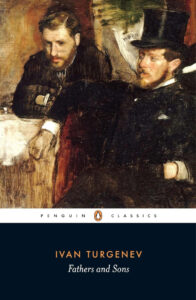
Pages: 240
Review by Anil Saxena
Fathers and Sons, by Ivan Turgenev is a moderately sized novel that captures the lives of 19th-century Russian society—its old generation of aristocrats and the young, educated rebels who have no respect for the old, decadent, and pompous world of the landed gentry. At its heart, it is a conflict between the old-world charm of well-settled landowners and the rebellious university graduates who discard old customs in the light of new scientific knowledge and rationalism. The result is the birth of nihilism.
As Turgenev himself puts it:
“A nihilist is a man who does not bow down before any authority, who does not take any principle on faith, whatever reverence that principle may be enshrined in.”
Context and Comparison with Contemporaries
Considering the works of his literary compatriots, Fathers and Sons is a modestly sized novel, but quintessentially Russian in its outlook. All forward-looking ideas that gripped Russia in the latter half of the century—rationalism, progress, and nihilism—are reflected here.
While Dostoevsky also dealt with nihilism, his protagonists often suffer from spiritual angst, torn between good and evil, and usually meet traumatic ends. By contrast, Turgenev’s protagonist, Bazarov, believes in nihilism but is not an unhappy soul. He is constructive, creative, and eager to build a new world while tearing down the old.
The Character of Bazarov
Bazarov, the hero of the novel, is a free thinker, naturalist, physicist, chemist, and medical practitioner. Unlike Dostoevsky’s tormented characters, Bazarov is a clear-eyed disruptor who challenges everything that fails the test of science or nature—be it customs, beliefs, or aristocratic pretensions.
To him, love is “only a kind of animal hunger.” Art and poetry are symbols of a decadent, conditioned mind. A cobbler is no less than a poet, for art holds no more value than its utility.
Storyline
The storyline unfolds as follows:
Two students—Arkady, a noble-hearted young aristocrat fresh from university, and his iconoclastic friend Bazarov—visit Arkady’s father, Nikolai Petrovitch, and uncle, Pavel Petrovitch, at Marino, their country estate.
- Nikolai Petrovitch: a kind-hearted retired widower, secretly living with his young housekeeper, Finichka, with whom he has a child.
- Pavel Petrovitch: a retired army officer, charming but a lonely aristocrat still haunted by lost love.
Young Arkady admires Bazarov’s clarity and uncompromising attitude. The generational clash between the non-conformist Bazarov and the aristocratic Pavel provides some of the most riveting exchanges in the novel.
Love and Contradictions
During their travels, Bazarov and Arkady meet the elegant widow Anna Odintsov and her sister Katya. Anna is breathtakingly beautiful, intelligent, and refined—“a woman with whom one could talk as with a man.”
Both men fall under her spell.
- Arkady, awed by Anna, gradually finds his match in Katya.
- Bazarov, the rationalist who dismissed love as a foolish sentiment, unexpectedly falls passionately in love with Anna.
His philosophy crumbles under the power of emotion:
“Love is like a forest fire—if it takes hold, it consumes everything in its path.”
Though Anna reciprocates his feelings, she realizes they are too alike—both proud and unsentimental—and withdraws, leaving Bazarov heartbroken.
Decline and Tragedy
After an unnecessary duel with Pavel Petrovitch, Bazarov returns to his parents. His father, a retired surgeon, and his deeply religious, devoted mother adore him and see him as destined for greatness.
But dejected and restless, Bazarov contracts a deadly infection while practicing medicine. Despite his parents’ desperate care, he dies tragically young. At the end, he asks to see Anna once more, but she arrives too late.
The Ending and Irony of Life
The novel closes six months later:
- Arkady marries Katya and settles into a comfortable aristocratic life.
- Nikolai marries Finichka, formalizing their union.
- Anna Odintsov marries a wealthy, influential man—cold and unfeeling.
- Pavel Petrovitch moves abroad, dazzling high society with his manners but consumed by loneliness.
- Meanwhile, Bazarov lies in his grave—“completely undisturbed by beasts and men”—while his grieving parents continue their sorrowful pilgrimages to his resting place.
Themes and Legacy
Fathers and Sons belongs to the great lineage of Russian literature alongside Dostoevsky, Tolstoy, Pushkin, Gogol, and Chekhov. Yet it stands apart. Bazarov, unlike Dostoevsky’s conflicted heroes, never suffers the pangs of conscience. He is sure of his principles—until love shatters his certainties.
This makes the novel both tragic and romantic. As Turgenev shows:
“We are all nihilists now, but some of us still tremble when we fall in love.”
My Conclusion
Fathers and Sons is not merely a political or philosophical novel—it is a deeply human story. While it portrays the ideological battles of 19th-century Russia, it also reminds us of the timeless conflict between reason and emotion, progress and tradition.
It is a romantic novel, a tragedy, and a classic to be adored.
Author Bio: Anil Saxena
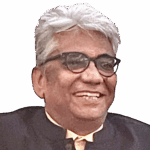 Anil Saxena is a retired Principal Chief Conservator of Forests and Head of Forest Force (HoFF), Maharashtra.
A lifelong nature lover and prolific reader, he brings depth, clarity, and insight to every book he reviews. As a Core Committee member of the Nagpur Book Club, he is known for his comprehensive reviews that make even complex subjects accessible and engaging.
Anil Saxena divides his time between Nagpur, Mumbai, and New York, enjoying the company of his children and grandchildren while continuing to explore the world of literature.