Book Review of ‘Ulysses’, by James Joyce
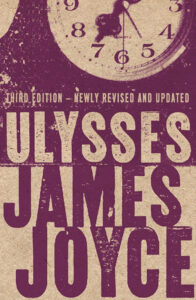
(704 pages)
Review by Anil Saxena
First Impressions and the Weight of the Text
Frankly enough, Ulysses, a novel by James Joyce, is not an easy read at all. An experimental novel written in 1912 or so, it is considered sui generis among modern experimental novels of the early decades of the 20th century. It is more a style of narration than content. The concept of stream of consciousness was first used here and later adopted by a host of 20th-century authors.
Its reading is akin to walking on land filled with minefields. Every four lines contain so many hidden references to slang, contemporary literature, history of the world and Ireland, and society of Dublin simultaneously. He wants to write a novel surpassing the geniuses of all his literary predecessors. So the first-time reader remains busy trying to get out of the labyrinth of words more than standing still and enjoying the beauty of it. It seems he carries the entire European civilization and culture on his shoulders in this novel. Its intricate narration has multifarious links not only with the arcane past but also with contemporary literature, politics, and society of Dublin of that period.
It speaks of its ongoing struggle to get out of the clutches of mighty England and explicitly comes out in depicting the anti-Semitism and anti-British sentiment prevalent in society.
As Joyce himself once provocatively noted in his letters:
“I’ve put in so many enigmas and puzzles that it will keep the professors busy for centuries arguing over what I meant, and that’s the only way of insuring one’s immortality.”
The Odyssey Recast: Story and Structure
The story of Stephen Dedalus and Leopold Bloom (with Jewish ancestry) is adapted from Homer’s epic Odyssey (or Ulysses, as Joyce knew Latin but not Greek). It is the story of a day in the lives of our two protagonists, one a 35-year-old married man and the other a young, 20-something budding philosopher and aspiring author.
The older one represents Ulysses, the hero of the Odyssey, while the younger one represents Telemachus (a son of Ulysses). Although in this novel, the two are not actual father and son as in the Homeric epic, Leopold considers Stephen as his son.
But that was not enough. The novel carries references to almost all classics of Western literature, from the most arcane to the latest. It has references to Shakespeare, Chaucer, Aristotle, Dante, the Bible, and other contemporary writings, including Joyce’s own Dubliners and A Portrait of the Artist as a Young Man. And as if that were not enough, there is the question of Irish identity vis-à-vis British domination. There are overt and covert references to Jewish identities and, most importantly, the contemporary political and social life of Ireland in the earliest part of the 20th century. Moreover, these references are not so explicit as to let us understand them at first glance.
To comprehend them, two steps are most necessary:
- Do not read it directly in first instance.
- Always read it with explanatory text side by side, as one goes chapter by chapter.
One cannot enjoy the novel without understanding the subtle cross references to all classics and their characters, which are littered all over the text of the novel like minefields.
The chapters are divided along the lines of Homer’s epic, but here the travails of many years of the hero of Homer’s Odyssey are confined to one day in the life of Stephen Dedalus and Leopold Bloom, while giving an epic a flavor of the modern era of the first two or three years of the 20th century.
Style: The Stream of Consciousness
The narration style is termed “stream of consciousness.” While you think and observe, you write. It is not a traditional text like all other novels of the past, but as the mind wanders from reference to reference, context to context, similarly the text here depicts what the character sees physically and what he thinks simultaneously is regurgitated directly onto the paper.
The author has tried to express whatever the character sees, hears, or thinks concomitantly, and that makes the reading quaint and incomprehensible at times. The reader is forced to reread.
In a single paragraph, you may find five to six references—hidden ones from Greek, Roman, Irish, and contemporary (politics, art, literature, history, science, and medical terms) lives.
Joyce had such belief in his genius that he said somewhere that this creation of his would keep scholars busy, continually searching for literary gems in it.
As one striking line from the novel goes:
History… is a nightmare from which I am trying to awake.
Characters: Flesh and Philosophy
Stephen Dedalus
Stephen is aloof, esoteric, and philosophical—an unaccomplished artist, a struggler who so far has not contributed anything worthwhile to literature, barring his soliloquies and deep brooding.
Leopold Bloom
Bloom is a very interesting character: a perfect modern man, a nonconformist man of flesh and blood who thinks of his wife, daughter, and acquaintances. He is simultaneously aware of his Jewish lineage and tries to hide it on some occasions. However, when push comes to shove, he doesn’t hesitate to confront a bigot or two with his quick-witted repartees. He is more humane, though not brave, and even cuckolded and jealous of his wife’s suitor.
He enjoys all aspects of life—right from defecation, to eating, to masturbating (he did twice in a day). His visit to Nighttown, with a mind of giving protection to Stephen Dedalus (who reminds him of his long-dead son) as his surrogate father, in a 150-odd paged chapter named “Circe,” has all sorts of sexual aberrations as described in Krafft-Ebing and Irving’s Sexual Pathology (masochism, cuckolding, cross-dressing), in its fantastic narration which tries to express subconscious desires/fears of Bloom through phantasm and humour.
Molly Bloom
Another important character in the novel is Molly. She was referred to throughout the book but made the appearance in flesh and blood only in the last chapter. She is a healthy woman who is “fair, fat, and forty.” She is acutely self-conscious about her womanly desires, takes pleasure in the display of her feminine figure, is promiscuous, knows the worth of her womanly power and charisma, and knows that men find her irresistibly attractive.
She enters into an extramarital affair in the full knowledge of her henpecked husband. In past too, she had her flings with men and, after marrying Leopold Bloom for the last 18 years or so and having two children—an elder daughter, now a teenager, and a son whom she lost when he was just 3 months old—she remains indolent. Though she does not consider Leopold an ideal husband, in the end, she prefers him over others, and especially over her present suitor (a rich, crude, brutish man), for Leopold’s being an overall well-mannered gentleman.
Her famous final soliloquy—the book’s climax—ends with the unforgettable affirmation of life and desire:
“…yes I said yes I will Yes.”
Themes, Language, and References
His text is replete with bodily effusion, semen, menstrual blood, defecation, eating, farting—which we all undergo without considering them as an object of expression. His references are not only to literature but to human physiology, anatomy, with full elaboration of scientific facts.
History, language, Latin, Old English, Irish English, contemporary history of Ireland and the conflict between English and Ireland, Chaucer, Shakespeare, Homer, Aristotle, Socrates, Milton, Dante, Goethe, physiology, Freud, Darwin, Ibsen, and innumerable references to other literary contemporaries and predecessors of Joyce find prominent place in the text. So much so it seems the heroes are not Stephen or Bloom but the language, style, and vocabulary themselves.
How to Read Ulysses?
Keep reading even if you miss half of the text or find it inscrutable. You may get it right in second or third iteration of reading.
There is a Facebook group where fans of Joyce are reading it even thirteen and fourteen times and still decipher something new in every reading.
The convolution in language is deliberately put there by the author to establish his originality and distinctiveness.
Frankly speaking, I was initially curious to learn about it and later took it as a challenge to read it. Once I started, despite occasionally feeling like giving up halfway, I persisted relentlessly until I acquired a very good schema (a guide) on Ulysses by Patrick Hastings.
In his Guide to James Joyce’s Ulysses, Patrick Hastings provides comprehensive support to readers of Joyce’s magnum opus by illuminating crucial details and reveling in the mischievous genius of this unparalleled novel. With the help from it, I began to find method in this madness and completed its first reading.
Personal Reflections and Conclusion
Aside from its esotericism, what I like about the book is the humane character of Leopold Bloom (a stark contrast to the mythical and heroic Ulysses of Homer’s Odyssey), who, despite all his humanly possible failings—even at one point thinking of pimping out his wife to his prospective surrogate son just out of envy for his rival suitor to his wife—is a character of modern times.
He faces the adversity of life nonchalantly, without any bravado, but still remains lovable.
I do not like the high brow aloofness of Stephen Dedalus—Joyce’s other protagonist—who, despite all his intellectual prowess, is too self-possessed and opaque in expressing thoughts to be liked.
But I truly enjoyed the vivid and almost visual panorama of the hustle and bustle of Dublin and Dubliners, with all its intricate descriptions. And perhaps it is that which would persuade me to read it again
Author Bio: Anil Saxena
 Anil Saxena is a retired Principal Chief Conservator of Forests and Head of Forest Force (HoFF), Maharashtra.
A lifelong nature lover and prolific reader, he brings depth, clarity, and insight to every book he reviews. As a Core Committee member of the Nagpur Book Club, he is known for his comprehensive reviews that make even complex subjects accessible and engaging.
Anil Saxena divides his time between Nagpur, Mumbai, and New York, enjoying the company of his children and grandchildren while continuing to explore the world of literature.