Book Review of ‘Shekhar: Ek Jeevani (Part I)’, by Sachchidananda Vatsyayan ‘Agyeya’
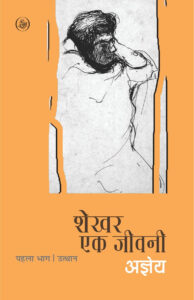
Hindi | Pages: 332
Review by Anil Saxena
Agyeya: The Enigmatic Literary Giant
Agyeya has remained somewhat unknown to me. Born in 1911, he held the Hindi literary world in awe for his entire career. He was an author, thinker, poet, journalist, soldier, and ultimately a jack-of-all-trades—a person who could be a tailor or mend his shoes like a professional, yet remained a bohemian. He was an enigma throughout.
If loved and admired by many, he was also criticized for his eclecticism, superciliousness, outright cynicism, pride, ego, and dense writings.
My Introduction to Agyeya
Akshay Mukul has written a long biography of him, and I listened to a 4.5-hour conversation between the author and podcaster Amit Varma. I became so enamored by its subject that the first thing I did was to start reading Agyeya’s first novel, which became a cult classic in its time.
I already owned a hard copy, but had never read it. This talk provoked me to buy its digital version, and I finished it in two to three days in a stretch.
The Novel’s Arrival and Its Impact
The first part of Shekhar: Ek Jeevani appeared in 1941 when Agyeya was just 30 years old, and it took the Hindi literary world by storm. A semi-autobiography, it charts the course of Shekhar—the protagonist—from childhood to adolescence and early adulthood.
The story begins in prison, where Shekhar, involved in revolutionary activities, fears that his life might end on the gallows.
From there, he reminisces about his early years.
“मृत्यु के इस सन्निकट क्षण में मैं अपने जीवन को नए सिरे से देख रहा हूँ।”
(At this moment, close to death, I am looking at my life afresh.)
A Precocious and Sensitive Child
Born into a well-to-do family of a government servant under the British, Shekhar’s father had a transferable job, which took the family across the country. With two elder brothers and a sister already, Shekhar was often a loner—precocious, oversensitive, and deeply introspective.
The novel, written in the first person, presents a child and later an adolescent who examines life both internally and externally, trying to iron out its wrinkles, fathom its mysteries, contradictions, appearances, and ideations—sometimes with success, often with failure.
A Born Rebel and Lover
Shekhar is portrayed as a born rebel and an indefatigable lover, inquisitive about everything around him—sex, nature, relationships, and existence itself. His family was a typical patriarchal one, providing all the comforts of a normal childhood, but Shekhar was different: clever beyond his years, hypersensitive, and observant.
He is distant from his mother, even despising her at times, while he fears yet admires his father. Between the two, he prefers his father.
One careless remark from his mother—that he too could not be trusted like his brother—became enough for Shekhar to storm out of the house in anger.
“मुझसे विश्वास छीन लो, और मैं जीते जी मर जाऊँगा।”
(Take trust away from me, and I die while living.)
The Inner Conflict: Love and Rebellion
Being the youngest, Shekhar yearns for trust and respect but cannot tolerate betrayal. He longs for love, but when love is reciprocated, he reacts violently. Beneath his crust of rebellion, non-conformity, and rudeness lies a vast reservoir of tenderness.
He purposely behaves like a spoiled brat to express his resentment, yet behind his façade of indifference lies warmth and affection. This paradox makes his character enchanting.
Relationships that Shaped Shekhar
Shekhar was closest to his elder sister Saraswati and later to his cousin Sashi. He loved Sharada, a neighborhood girl. In a southern hostel, he learned the painful price of trusting blindly. He was even unabashedly smitten by a male classmate.
Thus, Shekhar: Ek Jeevani (Part I) concludes—leaving us at the threshold of Shekhar’s emotional, psychological, and existential journey.
Critical Reception and Timelessness
I do not know much about the opinions of Agyeya’s contemporaries, but critics hailed the novel as a masterpiece of psychological insight into the mind of a sensitive adolescent.
Written in the 1940s, it never feels dated. It carries the essence of modernity and remains relevant even today. The depth of psychological observation is rare in Hindi literature, perhaps matched only by writers like Jainendra.
My Conclusion
I am yet to read Part II, but Part I feels like a complete masterpiece in itself. The second part may open new chapters of the protagonist’s life, but it cannot diminish the beauty and completeness of this volume.
‘Shekhar: Ek Jeevani’ remains a landmark in Hindi literature—not just for its autobiographical intensity, but for its profound exploration of the contradictions, passions, and vulnerabilities of human growth.
Author Bio: Anil Saxena
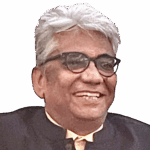 Anil Saxena is a retired Principal Chief Conservator of Forests and Head of Forest Force (HoFF), Maharashtra.
A lifelong nature lover and prolific reader, he brings depth, clarity, and insight to every book he reviews. As a Core Committee member of the Nagpur Book Club, he is known for his comprehensive reviews that make even complex subjects accessible and engaging.
Anil Saxena divides his time between Nagpur, Mumbai, and New York, enjoying the company of his children and grandchildren while continuing to explore the world of literature.