Book Review, and The Alchemy of Language, of ‘Ret Samadhi’ (Tomb of Sand), by Geetanjali Shree.
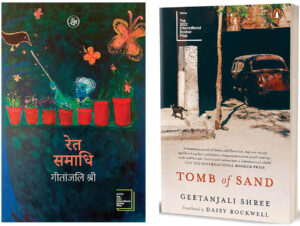
375 pages
Translated in English by Daisy Rockwell
Review by Anil Saxena
This 375-paged novel in Hindi (and its English translation Tomb of Sand by Daisy Rockwell) has created a storm in the literary circles of India, for it is the first book in Hindi to win the Booker Prize—a prestigious international award for any book.
I had not read any of Geetanjali Shree’s previous novels, so excited was I that I ordered the book at the very first instance. Reviews had already appeared in newspapers and on social media, including one by Mrinal Pande in The Indian Express.
The Beginning: A Slow Immersion
Initially, the first 40–50 pages felt like a slog. I was not able to catch the essence of what the author intended to communicate, except that there is a widow of nearly 80 living with her elder son—a soon-to-be-retired high-ranking government official.
Around her swirl a grumbling daughter-in-law, an independent spinster daughter who prefers her own shabby shack, hordes of servants, and two grandsons (one abroad in Australia, the other a happy-go-lucky fellow in India). The mother has lost all interest in life, turned her back towards the wall, and stares at it endlessly—oblivious of all enticements of life and the cajoling of her family.
Amma’s withdrawal—from life, towards a wall—was subtle yet haunting.
“धीमे-धीमे सब कुछ गुम हो जाता है… जैसे बेगुनाही ने दीवार को छू लिया हो।”
(“Gradually everything disappears… as if innocence has touched the wall.”)
This moment, emblematic of loss, signaled both what the story was and what it promised to become.
Everyone in the house tries, in their own way, to bring her back to normalcy: the patriarchal but caring son, his perpetually moaning wife, and others. Yet, all fail. The story meanders like a river, subplots emerging and dissolving, as the reader yearns for something remarkable to happen—like searching for a pattern in the first listening of a new classical raga.
The Turning Point
Then, all of a sudden, the mother disappears. The story takes fresh guard, becomes intense and engrossing, and remains so till the end.
When the mother returns, she starts living with her bohemian but caring daughter. The daughter’s sensitivity to her smallest needs, their intimacies and pranks, their innate desire to give each other space—all are dealt with remarkable deftness.
“धीमी-धीमी सब कुछ लौट गया… जैसे रेत की रूह में से कोई आवाज़ उठने लगी हो।”
(“Slowly everything came back… as if a voice began to rise from the soul of sand.”)
Amma’s persona now begins to bloom beyond recognition, and the story finds its true rhythm.
The Entry of Rozy/Raza
A new character, a transgender named Rozy/Raza, enters. The bedridden mother of yore is rejuvenated—the frail Amma is now up and running with all the engines of life roaring.
“इस बॉर्डर पर कदम रखते ही मानो सारी उम्र तमाशा बन गया था।”
(“The moment you step onto this border, the whole of life feels like a performance.”)
Without being a spoilsport, I will only indicate that Amma and her unwilling daughter (to her consternation and fear of collateral damage) find themselves in the notorious Khyber province of Pakistan, under the sinister shadows of Kalashnikovs. Why and how did they land there? Whom was Amma searching for so desperately? What triumphs in the end—diplomacy, the will to love, or the will to hate? To find out, you must read the novel.
Art and Craft
It dawned upon me while reading that the author is not only in command of her narrative but also dexterous with language. Her usages, metaphors, her andaz-e-bayan, her scintillating turns of phrase are exceptionally fresh and endearing.
“शब्द होते क्या हैं जी? ध्वनि जिसमें वे अपने मतलब झुला देते हैं।”
(“What are words, really? Sounds in which they dangle their meaning.”)
This reflects her linguistic philosophy—language as musical, alive.
She picks discarded, uncommon Hindi slang, retrofits them, and turns them into swanky, artful jewels. She cares little for grammar and openly says she wants to write in her own way—leaving Hindi more alive and enriched. Importantly, she does not indulge in mindless Hinglish. Instead, she salvages words and phrases lost in the whirlwind of Hinglish on one side and the indecipherable, crusty Hindi of scholars on the other.
It is said that Shakespeare’s genius lay in coining countless words and phrases that gave English its sheen and prolificacy. It would be too far-fetched to compare her with Shakespeare, but one can say she has certainly enlivened Hindi in a way rarely done before.
Feminism and Beyond
Is this novel feminist? By the author’s own admission, it is a story of two women. Yet she goes beyond feminism, creating empathy for one of the most abused and abhorred groups in society: the transgender community. Rozy/Raza occupies a central place in the plot.
“आदमी अपनी बनाई मूरत की पूजा करता है। भगवान ने जो मूरतें बनाई हैं उनकी नहीं।”
(“Man worships the idols he has made. Not those God made.”)
This mirrors the novel’s refusal to accept imposed narratives or borders—be they gendered, national, or linguistic.
Beyond that, the author condemns modern man—his lifestyle, his shallow anthropocentric worldview, his self-delusion. She shows how the modern life he created, though it has gained a bit, has forfeited a great deal.
Boundaries between nations are exposed as artificial. The sky is boundless, birds do not care for visas or passports. In a fantastical narrative (reminiscent of Panchatantra tales), even a crow appears more humane than humans themselves.
Shree categorically rejects Partition, questions its raison d’être, the holocaust and suffering it entailed, and the futility of this exercise from the point of view of common men and women. In this, she joins the lineage of illustrious predecessors like Manto, Intizar Hussain, Krishna Sobti, Bhisham Sahni, Rajinder Singh Bedi, and Khushwant Singh—all of whom, like her, believed love to be a greater force than hate.
Subtle Satire and Keen Observation
The novel is strewn with subtle satire on the incongruities of life and society. Shree’s humor is sharp—whether skewering the Wagah ceremony or listing party dishes. Her eye for detail shines.
“झूठी रोशनी में हर छोटी हरकत कैमरे में कैद है।”
(“Under that fake light, every little movement is captured on camera.”)
Her eye misses no detail: from the list of cuisines at her son’s retirement party, to Amma’s ethnic saris (a veritable treasure trove), to the ragtag décor of the daughter’s home seen through the daughter-in-law’s eyes. These details come as vignettes, snapshots that punctuate the flow of narrative.
Style: Magical Realism in Hindi
This style of writing—magical realism—is common in English and the West, but rare in Hindi. Shree seems inspired by Krishna Sobti and Nirmal Verma. Here, the main plot is accompanied by tributary subplots that emerge and vanish at will. The restrictions of past and present are breached with impunity. One has to remain alert to keep pace with the flow the author sets.
“एक सीमा नहीं, गाथा की कोई मुख्यधारा ज़रूरी नहीं… वह नदी की तरह बहे, बहे…”
(“There’s no main stream to a saga… it can run like a river, flowing wherever.”)
Her narrative flows irresistibly between reality and myth.
The Alchemy of Language in Ret Samadhi
If Ret Samadhi has left such a deep mark, it is not merely because of its story but because of its language, rhythm, and audacity of expression. Geetanjali Shree does not treat Hindi as fixed; she treats it as a living, breathing entity—pliable, playful, subversive.
Her prose constantly invents—bending grammar, coining new verbs, reviving rustic colloquialisms, and creating chains of sound that echo like folk rhythms or street chatter. Sometimes words collide like stones to produce sparks; at other times they dissolve like sand shifting in the desert.
The Booker jury praised Shree’s work for precisely this freshness of idiom. Daisy Rockwell’s translation (Tomb of Sand) carries across this inventiveness, but the shimmer of Shree’s Hindi remains unique.
Below is a lexicon of her inventiveness—a list of words, phrases, and linguistic liberties that exemplify her artistry.
Mini Case Studies of Word Alchemy
-
“चूर मूर हो जाने के चूरे में व्यस्त” – Not just “shattered,” but absorbed in brokenness itself.
-
“मुँह चरपराना” – Coined verb from chewing/jabbering sounds.
-
“घर से तुर्राई बेटी” – “A daughter strutting out of the house”; sharp humour against patriarchy.
-
“इतिहास नहीं गलफांस है” – “Not history, but a snare.”
-
“Coffee घुटियाना” – Coffee made to sound earthy and bodily.
-
“ऊपर से शेर, अंदर से पिचकिया” – “Lion outside, deflated inside.”
A Lexicon of Geetanjali Shree’s Inventiveness
One of the most delightful aspects of Ret Samadhi is Shree’s playful experimentation with words and grammar. She bends rules, invents phrasings, and breathes new life into colloquial Hindi.
Below is a check-list of some striking examples—words, phrases, and linguistic liberties she employs, which now stand rejuvenated.
| Hindi | Transliteration | Meaning | |
|---|---|---|---|
| चूर मूर हो जाने के चूरे में व्यस्त | choor-moor ho jaane ke choore mein vyast | Lost in complete shattering | |
| फङाफङ, फङाफङ फङक फड़क | phada-phad, phada-phad phank phadak | Onomatopoeic flapping, fluttering | |
| अपनी उनकी लहलहारट | apni unkee lahraahat | Their flowing, lilting charm | |
| दिल कलौसना | dil kalousna | Heart shrinking, withering | |
| घर से तुर्राई बेटी | ghar se turriyaee beti | Daughter proudly defying the household | |
| अंग्रेजी में टिन्नाई | angrezi mein tinnaai | Hollow sound/echo in English | |
| मुँह चरपराना | munh charparana | Mouth mumbling, chewing sounds | |
| लचक मचक के पीठ दीवार सी सपाट | lachak-machak ke peeth deewaar si sapaat | Wriggling spine suddenly flat like a wall | |
| दन्दफन्द | dandfand | Scuffle, tussle | |
| चौप कायं कायं काट कपाट फिस | chaup kaayn kaayn kaat kapat phiss | Rhythmic nonsense phrase, sound play | |
| सिखावन | sikhaavan | Instruction, moral lesson | |
| भदेसपना | bhadespana | Rustic crudeness | |
| फरफरे, छिछले, उथले, सिलबिले लोग | pharphare, chichhle, uthle, silbile log | Fickle, shallow, slippery people | |
| थुलथुले नकलची हिन्दुस्तानी | thulthule nakalchi hindustani | Flabby imitative Indians | |
| रान्डू पान्डू | randu pandu | Derogatory comic phrase | |
| थिलथिलाहट | thilthilahat | Loose, wobbly movement | |
| थुजा थुजा थोबड़ा | thuja thuja thobda | Drooping face | |
| होंठ फटा सा जैसे थिगला लटक गया | honth phata sa jaise thigla latak gaya | Split lip hanging like a rag | |
| घरचर्चा | ghar-charcha | Domestic chatter | |
| कहानी, रुके, उड़े, चले, मुड़े, होए जब होए | kahani, ruke, ude, chale, mude, hoye jab hoye | Story flowing with pauses and turns | |
| घमकीली हवायें | ghamkeeli hawaayein | Stormy winds | |
| भाड़े भित्ते | bhaade bhittey | Ramshackle, makeshift walls | |
| हाका हाकी मचती है | haaka haaki machti hai | Commotion, hue and cry | |
| मियां बीबी बज उठे | miyaan-biwi baj uthe | Husband and wife clashing | |
| घुड़सवार लट्टूआ गया | ghudsawar lattuaa gaya | Rider arriving clumsily, like a top | |
| ऐ भाषी चुप | ai bhaashee chup | Hey talker, be silent! | |
| मकड़ियां पिट पिट पिटर पिटर दौड़ पड़ीं | makdiyaan pit-pit pitar-pitar daud padi | Spiders scurrying noisily | |
| Coffee घुटियाना | coffee ghutiyaana | Coffee made thick and clotted | |
| खों खों सुङ सुङ | khon khon sud-sud | Coughing and sniffling | |
| थसम थसा, तितर बितर चिल्लास बत्ता | thassam thassa, titar-bitar chillas-batta | Clamour, scattered shouting | |
| गेंदतड़ी | gend-tadi | Ball play / game | |
| ऊपर से शेर अंदर से पिचकिया | upar se sher andar se pichakiya | A lion outside, hollow inside | |
| गेंहू का होराहा | gehun ka horaaha | Heap of wheat | |
| भूजो आग में | bhoonjo aag mein | Roast in fire | |
| उलीच के | uleech ke | Pouring out, emptying | |
| हलहलाकर | hulhulaakar | Shaking, stirring violently | |
| मनहरपन, औघड़ता, महबूबियत, कराहियत, खुशमान, रमक, रौनक | manharpan, aughdata, mahboobiyat, karaahiyat, khushman, ramak, raunak | Sweetness, wildness, belovedness, anguish, joy, sparkle, splendour | |
| धूपिल-बिंदियां | dhupil-bindiyaan | Sunlit specks | |
| धूप-मुग्ध | dhoop-mugdh | Sun-dazed | |
| बाल्टी रंकाई | baalti rankaai | Bucket rattling sound | |
| लथड़ते कपड़े, लड़खत चाल | lathadte kapde, ladkhat chaal | Drooping clothes, staggering gait | |
| घमकीली धूप | ghamkeeli dhoop | Fierce sunshine | |
| अट्ट-सट्ट पकड़ना | att-satt pakadna | Holding on tightly, clinging | |
| इन्तेकामी | intekaami | Revengeful | |
| बीज अखुआना | beej akhuaana | Seed sprouting | |
| अटकना-मटकना | atakna-matakna | Teetering, tottering | |
| सड़क पर सड़की | sadak par sadki | Loitering on the road | |
| आखिरी धूप के थक्के | aakhri dhoop ke thakke | Last lumps of sunshine | |
| दिल और खलबलाए | dil aur khalbalaaye | Heart fluttered, disturbed | |
| सर खुज खुज | sar khuj-khuj | Scratching the head | |
| महसूसना | mahsoosna | To feel (playful verb form) | |
| थूक-मूत-पाखंगी | thook-moot-pakhangi | Spitting, urinating, dirtying | |
| लबाड़-धबाड़ | labaad-dhabaad | Noisy clatter | |
| कौआ-काहिली | kauaa-kaahili | Lazy crow-like idleness | |
| कौवी-हट्ट | kauvi-hatt | Crow’s stubbornness | |
| लसड़-फसाद | lasad-fasaad | Messy quarrel | |
| इतिहास नहीं गलफांस है | itihaas nahin galfaans hai | “It’s not history, it’s entanglement” | |
| भटक-चिटक | bhatak-chitak | Wandering, scattering | |
| जंजीर बंधा तामलोट | janjeer bandha tamlot | Something bound tightly with chains | |
| घंटी-सीटी लेखान | ghanti-seeti lekhan | Writing like bells and whistles | |
| देखते क्या हो बितर बितर | dekhte kya ho bitar-bitar | “What are you staring at, scattered-eyed?” | |
| बरसात छुपाती है | barsaat chupaati hai | Rain conceals | |
| गर्भित, भरमित, पथिक, चकित | garbhit, bharmit, pathik, chakit | Pregnant, confused, wanderer, astonished | |
| दायें-बायें घूम घूम घूर घूर | daayein-baayein ghoom-ghoom ghoor-ghoor | Turning right and left, glaring around | |
| त्रस्त तन्नाई सुगबुगाहट | trast tannai sugbugaahat | Oppressed loneliness, simmering unrest | |
| हम रेत रेत, हम डूब डूब | hum ret-ret, hum doob-doob | We are sand, we are drowning | |
| मेलमस्तियां | melmastiyaan | Courtesies, hospitalities | |
| लटड़-फड़त | ladad-fadad | Rough scuffle | |
| बिलफेल | bilfail | Utter failure | |
| दो तपताये चित्त | do taptaaye chitt | Two burning minds/hearts | |
| गिज-गिजी, मिच-मिची | gij-giji, mich-michi | Sticky, squishy | |
| गुजा-मुजा | guja-muja | Tangled, confused |
My Verdict
Ret Samadhi is a novel that pushes Hindi into uncharted waters—reviving lost words, inventing new idioms, and rejecting boundaries of grammar, nation, gender, and even species. It deserves its Booker not only for its story but for giving Hindi a fresh, playful, fearless voice.
This is a book to own and cherish for long, one that deserves revisiting for its vivid imagery, nuanced observation, and fresh narrative energy. My only request: try to read it in Hindi if possible.
Author Bio: Anil Saxena
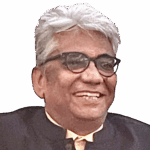 Anil Saxena is a retired Principal Chief Conservator of Forests and Head of Forest Force (HoFF), Maharashtra.
A lifelong nature lover and prolific reader, he brings depth, clarity, and insight to every book he reviews. As a Core Committee member of the Nagpur Book Club, he is known for his comprehensive reviews that make even complex subjects accessible and engaging.
Anil Saxena divides his time between Nagpur, Mumbai, and New York, enjoying the company of his children and grandchildren while continuing to explore the world of literature.