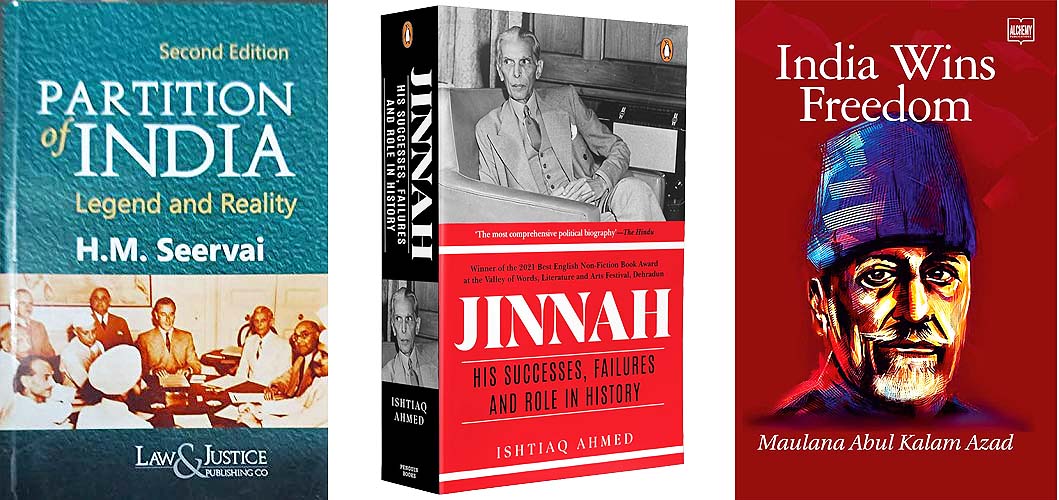
A Reading of ‘India Wins Freedom’, ‘Partition of India: Legend and Reality’, and ‘Jinnah: His Succesees, Failures, and Role in History’
Reflections and Analysis by Anil Saxena
Editor’s Note
The Partition of India remains one of the most difficult and debated episodes of modern history. It resists simple explanations and demands careful, informed engagement. In this two-part essay, the author examines Partition through three influential works by Maulana Abul Kalam Azad, H.M. Seervai, and Ishtiaq Ahmed, each offering a distinct perspective on leadership, responsibility, and historical choice.
Part One focuses on Azad and Seervai, whose arguments challenge the idea that Partition was inevitable and highlight the consequences of political misjudgment and British haste. Part Two, to follow shortly, will engage with Ishtiaq Ahmed’s interpretation of Muhammad Ali Jinnah and the making of Pakistan, completing the conversation this essay sets out to begin.
Readers are invited to approach this series not for final verdicts, but for deeper understanding and thoughtful reflection. – Rohit Tokhi
Part 1
The Partition of India in 1947 remains one of the most tragic and consequential events of the twentieth century. Independence from British rule arrived hand in hand with one of the largest mass migrations in human history, accompanied by violence, displacement, and loss on a staggering scale. Millions were uprooted, hundreds of thousands were killed, and the subcontinent was permanently altered. Yet, despite the enormity of the event, the reasons behind Partition continue to be debated, contested, and often oversimplified.
My own understanding of Partition for many years was partial and largely shaped by popular narratives. It was only after reading three important works, India Wins Freedom by Maulana Abul Kalam Azad, Partition of India: Legend and Reality by H.M. Seervai, and Jinnah, Pakistan and Islamic Identity by Ishtiaq Ahmed, that I began to appreciate how complex, contingent, and human the process really was. These books do not offer a single, unified truth, nor do I claim that they together present the final or most accurate account. History rarely allows such certainty. What they do offer, however, are well-argued interpretations supported by documentary evidence, and, importantly, perspectives that challenge comfortable assumptions.
A striking feature of these works is the convergence between Azad and Seervai on many key issues, despite their very different positions and temperaments. Ishtiaq Ahmed, on the other hand, presents a sharply contrasting interpretation, particularly on the role of Muhammad Ali Jinnah and the inevitability of Pakistan. This first part focuses primarily on Azad and Seervai, while the second part will engage with Ahmed’s arguments.
Why Azad Before Seervai
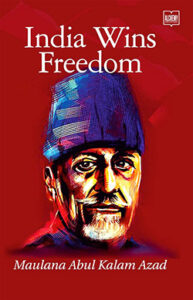 Azad’s ‘India Wins Freedom‘ and Seervai’s book have many commonalities. Barring a few details, both authors’ opinions about the events as they unfolded during that era match. However, Ishtiaq’s book offers an altogether different take on the partition of India than its two predecessors.
When I came across Seervai’s work, I realised that it leaned heavily on the Transfer of Power volumes and on Maulana Azad’s India Wins Freedom. It therefore seemed essential to read Azad first, not merely as a source but as a participant who was deeply involved in the events leading up to independence. Azad’s account is personal, reflective, and often painful. It is also restrained, especially considering the bitterness he must have felt at being sidelined during critical moments.
The Importance of Seervai’s Book
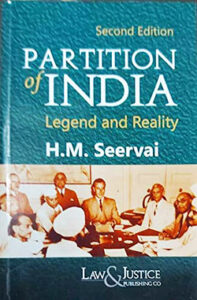
Seervai’s book is remarkable for its forensic use of official British documents, particularly the Transfer of Power papers. His central contribution lies in dismantling what he calls the “legend” surrounding Partition, the idea that it was inevitable, unavoidable, or solely the result of Muslim League intransigence. Seervai argues instead that Partition was the outcome of a series of political miscalculations, failures of leadership, and British duplicity.
The Emergence of Gandhi and the Role of Religion
Gandhi entered the Indian political arena decisively during the latter part of the second decade of the twentieth century, most notably through his leadership of the Khilafat Movement and the wider campaign of non-violent non-cooperation. These movements aimed to unite Hindus and Muslims on a common platform of resistance against British rule, giving the freedom struggle a mass and inter-communal character. However, Muhammad Ali Jinnah sharply criticized this approach, viewing the Khilafat alliance as an appeasement of orthodox, communally oriented Muslim leaders and a departure from what he believed had been a largely secular and constitutional anti-imperialist movement until then.
At this stage, Jinnah himself was a committed secularist and was widely regarded as a vital intermediary between the Indian National Congress and the Muslim League. His political outlook emphasized constitutionalism and cooperation, reflected in his acceptance of the terms of reference of the Lucknow Pact of 1914, which symbolized Hindu–Muslim unity within a nationalist framework. It was only later, following growing disillusionment with Congress politics and Gandhi’s methods, that Jinnah moved toward a more explicitly communal stance.
H. M. Seervai has argued that the introduction of religious symbolism into Indian politics did not originate with Jinnah but with Gandhi himself. According to Seervai, Gandhi’s deliberate use of religious idioms and causes; particularly during the Khilafat Movement, marked the first major instance of religion being employed as a political instrument in the nationalist struggle.
The Nehru Report and a Lost Opportunity
The Nehru Report of 1928 proposed dominion status, a federal structure, joint electorates, and strong minority safeguards. Importantly, it rejected the idea of separate electorates, which many believed entrenched communal divisions. Seervai contends that the report was a serious attempt to arrive at a constitutional settlement. Jinnah’s rejection of the report and his subsequent formulation of the Fourteen Points marked a decisive shift. Seervai interprets this as the moment when Jinnah moved from being a constitutional nationalist to a communal negotiator.
Provincial Elections of 1937
The provincial elections of 1937 proved to be another turning point. Congress emerged as the dominant force but failed to form coalition governments with the Muslim League. Seervai argues that this was a grave political mistake. Gandhi, he notes, had the moral authority to insist on inclusive governance but chose not to exercise it. This failure reinforced Muslim League fears of permanent marginalisation.
World War II and Congress Strategy
The outbreak of the Second World War further complicated matters. Congress ministries resigned in protest against India being dragged into the war without consultation, while the Muslim League celebrated the resignations. Seervai is critical of Congress’s decision to launch the Quit India Movement in 1942, calling it ill-timed and strategically disastrous. The British response was swift and severe, imprisoning the Congress leadership and leaving the political field open for the Muslim League to consolidate its position.
Failed Negotiations and Missed Chances
Several attempts were made to resolve the deadlock, including the Cripps Mission, the Gandhi–Rajaji formula, and the Desai–Liaqat Pact. All failed. Jinnah famously declared that Pakistan might be “maimed, mutilated and moth-eaten”, but insisted that some form of Pakistan was non-negotiable. Each failure hardened positions and narrowed the space for compromise.
The Cabinet Mission Plan
The Cabinet Mission Plan of 1946 represented perhaps the last genuine chance to preserve Indian unity. It proposed a loose federation with grouped provinces and significant autonomy. Both Congress and the Muslim League initially accepted the plan, albeit with different interpretations. Jawaharlal Nehru’s subsequent press statement asserting Congress’s freedom to reinterpret the plan proved, in Azad’s words, “most unfortunate”. Jinnah withdrew his support and called for Direct Action, leading to widespread violence.
Wavell, Mountbatten, and British Haste
Lord Wavell’s attempts to hold the line were undermined by a lack of support from the British government. His removal and replacement by Lord Mountbatten marked a decisive shift. Seervai is particularly harsh on Mountbatten, accusing him of undue haste, bias towards Congress, and a reckless acceleration of the transfer of power. The secrecy surrounding the Radcliffe Award until after independence is described as one of Mountbatten’s most unforgivable decisions.
Who Made Partition a Reality
Seervai does not absolve any party of responsibility. He is critical of Jinnah’s rigidity, Congress’s arrogance, Gandhi’s moral absolutism, and British opportunism. However, he reserves his strongest criticism for Mountbatten, whom he regards as the single most damaging actor in the final phase.
Seervai on Azad, Gandhi, Nehru, and Patel
Seervai treats Azad with considerable respect, portraying him as principled, consistent, and tragically ignored. His assessment of Gandhi is more ambivalent, acknowledging his moral stature while criticising his political methods. Nehru is faulted for impatience and overconfidence, while Patel is seen as pragmatic but insufficiently imaginative.
The Hindu Mindset and Power Politics
One of the most uncomfortable arguments in Seervai’s work concerns what he describes as the Hindu mindset within Congress leadership. He cites several instances where Congress leaders failed to appreciate Muslim anxieties or dismissed them as unreasonable. Power, Seervai suggests, increasingly became the central objective, even at the cost of unity.
My Final Thoughts
The picture that emerges from Azad and Seervai is not one of inevitability but of tragedy born from human choices. Partition was not preordained. It was made possible by fear, mistrust, miscalculation, and haste. Understanding this does not assign easy blame, but it does restore agency to history.
In Part Two, I turn to Ishtiaq Ahmed’s interpretation of Jinnah and Pakistan, which challenges many of Seervai’s conclusions and forces us to re-examine the question of inevitability once again.
Author Bio: Anil Saxena
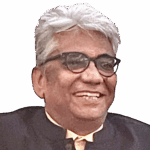 Anil Saxena is a retired Principal Chief Conservator of Forests and Head of Forest Force (HoFF), Maharashtra.
A lifelong nature lover and prolific reader, he brings depth, clarity, and insight to every book he reviews. As a Core Committee member of the Nagpur Book Club, he is known for his comprehensive reviews that make even complex subjects accessible and engaging.
Anil Saxena divides his time between Nagpur, Mumbai, and New York, enjoying the company of his children and grandchildren while continuing to explore the world of literature.