One Hundred Years of Solitude
– By Gabriel García Márquez
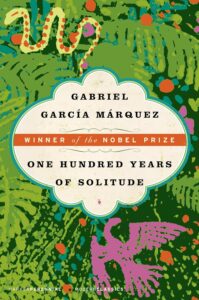 448 pages | Buy Book
Book Review by Anil Saxena
(Reviewed on a Second Reading)
Why Read a Classic More Than Once
While reading One Hundred Years of Solitude a second time, I came to this little realization: classics ought not to be read only once. When one reads a classic for the first time, one is so awed by its dazzling craft, storyline, and narration that one doesn’t pay minute attention to all its nuances and minute jewels which remain hidden beneath the fine tapestry of the author’s narrative.
When one revisits it, his major attention is not to the basic storyline because he already knows that, as well as the ultimate direction it leads to. The second, or even more than that, reading makes one look for details of its landscape that were overlooked in the hurry of the first reading. The first reading is akin to traveling by car, and the second is akin to walking on foot, where one notices even the most modest twist and turn of the path.
An Epic from Latin America
This modern epic comes from Latin America and shook the world with its fresh ideas, unconventional narration, and content. Every culture yearns for its own mythology, legends, and epics. Cultures lacking them must remain content with ancient Greek and Roman epics.
This modern epic emerges from the soil of Latin American backwaters and, like all epics, has a phase of building a sub-society, tradition, and culture, which grows, prospers, declines, and finally goes to seed. As in all epics, a patriarch and a matriarch build their universe (here they establish a village/city named Mantago), flourish, expand, procreate, and their family lives up to seven generations until it again degenerates and falls apart like a pack of cards, and nothing survives of it.
Humour, Incest, and the Cyclical Curse
This tragicomic saga, or black comedy, is narrated with great chutzpah, and even the most tragic events are laced with a unique and original black humour. Even in the grimmest and most disturbing moments of life, the humour is a constant companion, like background music, and ultimately its fragrance pervades the novel.
Another peculiarity permeating the novel is a fear of committing incest, a theme that reverberates throughout. Úrsula’s fear of marrying a cousin and begetting piglets was unfounded; however, the palpable love affair bordering on incest between Amaranta (an aunt) and Aureliano José (her nephew), which was fortunately averted, and the final incestuous affair in the last generation of Buendías between an aunt and nephew bring the tale of the Buendía family to a close.
“Races condemned to one hundred years of solitude did not have a second opportunity on earth.”
A Psychoanalyst’s Delight
Characters are the delight of psychoanalysts; Freud would have been happy to confine Rebeca, Amaranta, and Aurelianos (father, son, and great-grandson) on his couch, asking endless questions.
A modern epic of Colombia, where a patriarch and matriarch create their own town called Macondo. The repressed desires, guilt, jealousy, and deep insecurities of Amaranta, who constantly wrestled with immense love and moral restraint all her life. The self-imposed solitude and avoidance of confrontation of his failures and losses by Aureliano Buendía and the hedonistic gluttony of Aureliano Segundo are all gems of psychological kinks.
José Arcadio Buendía: The Mad Genius
“The only difference between a madman and me is that I am not mad.”
Patriarch, maverick, childlike—José Arcadio Buendía: half-genius, half-mad dreamer; a curious adventurer imbued with the spirit of science without formal education. A pioneer and leader of men, fearless and good with his hands, he always disassembled and assembled things, constantly thinking and executing his hare-brained schemes; some succeeded, and some failed.
He built Macondo from scratch, planning its housing, drainage system, and all. With the periodical arrival of gypsies in Macondo, they would bring sometimes magnet ingots, sometimes large magnifying glasses, sometimes a sextant; and our unperturbed genius would wholeheartedly pursue gold throughout Macondo and its surroundings, on land or at sea, or demand a daguerreotype of God to acknowledge his existence, or indulge in alchemy in search of the philosopher’s stone, much to the chagrin of Úrsula, his devoted and loving wife, until he went completely mad and was bound to a chestnut tree for the remainder of his life, under Úrsula’s care.
Though his presence in the novel was sparse, he remains by far the most endearing character. One laughs at his antics and loves him for his courage, ambition, simplicity, and forthrightness. So, when he died, a continuous shower of flowers fell from the sky for a few days as a mark of respect.
Úrsula: The Matriarch
Úrsula, a formidable matriarch and perhaps the only sane person, always in control of her faculties, is a pivotal figure in the novel, witnessing all the glories, debacles, and sorrows of her family.
When she died, she was somewhere between 115 and 122 years of age and outlived all of her offspring and most of her grandchildren and great-grandchildren. When she married her cousin, José Arcadio Buendía, of her own volition, she had a nagging apprehension about this unnatural union and suffered from a fear of producing piglets as offspring, initially avoiding intimacy with her husband.
It was she who kept them united, nurtured them all, cared for them, fought for them, and had the biggest heart. She accepted a girl child from her distant relations (Rebeca) as her own and had a great capacity for love and nurturing. All her efforts were to keep the family together.
As long as she lived, she prevented the family from straying down the path of immorality and disintegration. The sweet candy toys she sold in the local market supported the family through thick and thin. When she turned 100 and more, she lost her sight completely but kept doing all the household chores without letting anyone know of her blindness. Such was her control over her faculties and sharpness of mind.
The First Generation: Sons of Úrsula
Úrsula bore two sons, José Arcadio, the eldest, and Aureliano, and a daughter, Amaranta, as her last offspring.
The firstborn son of Úrsula and José Arcadio Buendía was named José Arcadio. He was not a piglet and had no tail, much to Úrsula’s relief. But he was a giant with broad shoulders and a huge male organ and was a delight to ladies. Though not very bright, this voracious eater and tower of strength was the envy of men and the delight of women.
Soon, with the awakening of a sexual urge, he fell into the temptation of having an affair with the bohemian tarot card reader, Pilar Ternera, begetting a male offspring named Arcadio. Later, he ran away with gypsies, and after his return many years later, he forced upon Rebeca—an orphan girl raised by Úrsula as her own daughter—married her, much to Úrsula’s and the family’s annoyance.
After the marriage, they lived separately from the family, indulging in farming and hunting, and one day he was found dead in a suspicious manner.
Arcadio: Power and Cruelty
Arcadio, the son of José Arcadio, following in the footsteps of his uncle Aureliano, came into politics. With liberals coming into power, he became administrator of Macondo. But he proved to be very authoritarian and cruel. Úrsula disliked it and condemned him. Arcadio remained corrupt and made changes in land records to benefit José Arcadio Buendía, his father.
He married Santa Sophia de la Piedad and sired a girl named Remedios the Beauty. Later, when conservatives won, and Arcadio lost the war, and was to be shot by a firing squad, he asked his wife Santa Sophia to name her unborn child Úrsula if it happened to be a girl and felt a surge of love for all his family whom he hated all his life.
Later, twins named José Arcadio Segundo and Aureliano Segundo were born to his wife after his death.
“A person does not die when he should but when he can.” — Aureliano Buendía
Aureliano Buendía: The Revolutionary
The second son of José Arcadio Buendía and Úrsula, Aureliano Buendía, was a precocious child. When he was born, he looked at his surroundings and the people around him with open eyes. Úrsula believed that he possessed supernatural powers.
Later, Aureliano Buendía learned to be an alchemist after his father, who was in search of the philosopher’s stone to convert metals into gold. Aureliano Buendía became an adept silversmith and perfected his alchemy.
After some time, a magistrate with seven daughters arrived in Macondo. Brooding and hermetic Aureliano Buendía fell in love with the youngest, who was still a child. Aureliano Buendía wept and went to Pilar Ternera for solace, and in turn, begot a son (Aureliano José) from her.
Once his masculinity was proven, he revealed his love for Remedios, the magistrate’s daughter. Aureliano Buendía married the loving and caring Remedios after she attained puberty. Unfortunately, this lovely young woman died of poisoning under mysterious circumstances, along with her twin fetuses.
War and Solitude
The dejected Aureliano Buendía continued his vocation as a smithy and kept visiting his in-laws in the evening. Elections were held. His father-in-law was a conservative and cheated in the election. Aureliano Buendía, considering himself a liberal, joined the revolutionary forces to fight the conservatives, thus starting his long and arduous journey as a fighter and revolutionary.
He fought 32 battles and lost them all, slept with 17 women, and sired 17 children, all of whom died before reaching 35 years of age. He also faced a firing squad but was saved by his brother, José Arcadio, at the last minute; he escaped 33 assassination attempts. Once, he shot himself in the chest, and the bullet passed through without causing any damage.
“Many years later, as he faced the firing squad, Colonel Aureliano Buendía was to remember that distant afternoon when his father took him to discover ice.”
Such was the hero worship that young maidens would voluntarily sleep with him to beget sons from him.
Escaping from a firing squad, he again went to a series of revolutionary wars, as usual, and collected a lot of aura, myth, and cult around his personality. During his war years, Aureliano Buendía was poisoned by a strong dose of nux vomica, but Úrsula brought him back to life with her meticulous treatment and care.
Aureliano Buendía started writing poetry again, and then came the final realization that the wars he had been fighting were to bolster only his pride, unlike others who wanted to establish liberal governments.
After a great struggle, Aureliano Buendía won the revolution and controlled Macondo as well; but soon he, too, became a victim of power, as ruthless and inhuman as those he had opposed, sacrificing his convictions to settle scores and win at all costs.
Power devoured all his revolutionary spirit; he became as ruthless, as brutal as he despised in others.
Aureliano Buendía lived a reclusive life with his three mistresses, losing interest in everything. He drew a ten-foot circle that no one could enter, not even Úrsula. In his arrogance of power, he once ordered the killing of his own comrade and dear friend. Only when Úrsula threatened to kill Aureliano Buendía herself did she save his life.
Then the tide turned against him; he tried to kill himself by shooting himself in the chest, but the bullet came out of his back cleanly without hurting any vital organs. Since then, he lost his will to live.
After that, he just kept lying in his hammock, creating goldfish out of gold coins in his tiny room. Once a great revolutionary, Aureliano Buendía lost all spirit of revolution. He just pined for death, his only vocation making goldfish out of gold coins and selling them to get more gold coins to make more fishes. He enjoyed doing this Sisyphean ordeal.
Úrsula, with her perfect business sense, saw this with sadness. He became a living legend, a folklore hero; sagas were written about him, but no one knew if he was alive or dead.
One day, this hero, this great warrior who survived 32 assassination attempts, firing squads, and poisoning, succumbed and died without a whimper.
Amaranta and Rebeca: Sisters in Rivalry
Amaranta, the last child of José Arcadio Buendía and Úrsula, was born a few years after Aureliano Buendía. Later, Úrsula adopted a girl child named Rebeca, a distant relative whose entire family had perished in a plague. Rebeca had a strange habit of eating earth and the plaster off walls, which she had picked up in childhood as a sign of shock.
Rebeca grew into a pretty and lively girl, whereas Amaranta was unattractive and short-tempered. When the magistrate’s family arrived in Macondo, and his daughters started coming to the Buendía household, Amaranta fell in love with Pietro Crespi, an Italian musician and a perfectionist who taught music and dance. But Pietro fell in love with Rebeca instead.
This drove Amaranta mad with jealousy. She hated her stepsister and poisoned her mind against Pietro. Ultimately, Rebeca married José Arcadio, and Pietro was left heartbroken.
Amaranta’s hatred and her rejection of love ruined the lives of both sisters. Amaranta was proposed to by her nephew Aureliano José, but she spurned him as well, consumed by her own repression and guilt. Amaranta remained a spinster all her life, wrapping her hand in a black bandage to signify her emotional wounds.
“She died at dusk, with her bandaged hand on her breast and a smile of pride on her lips, the virgin Amaranta, who had rejected so many suitors, died at last with no one beside her bed.“
She always wore black and burned her own hand as penance, never allowing love into her life.
Rebeca, once the apple of everyone’s eye, later led a lonely life, exiled from the family after her elopement with José Arcadio. After his death, she lived in seclusion, wearing black, her house filled with cobwebs and solitude. She died in complete anonymity and was buried without fanfare, as she had been erased from the family memory.
Remedios the Beauty: Innocence and Ascension
Remedios the Beauty, the daughter of Arcadio and Santa Sofía de la Piedad, was the most beautiful woman in Macondo. Her beauty was so overwhelming that it caused havoc, even death, in the hearts of men.
Several men lost their senses and died while thinking of her. She was completely innocent and unaware of the effect her beauty had. She lived with purity and detachment from the material world, often walking around naked without any self-consciousness.
Once, she was sent to the convent by Úrsula to discipline her, but the nuns sent her back, unable to cope with her innocence and ethereal presence. Remedios the Beauty had no interest in marriage or romance.
One day, while folding sheets in the backyard, she was taken up to the heavens, body and soul, a miraculous event witnessed by all.
“Remedios the Beauty remained floating in the air in the midst of the flapping sheets, with a light, almost imperceptible breeze carrying her away.”
It was the only miracle in Macondo that no one doubted. Her ascension was a rare moment of divine grace in a world cursed by solitude.
Aureliano Segundo and José Arcadio Segundo: Mistaken Identities
Aureliano Segundo and José Arcadio Segundo, the twins born to Santa Sofía after Arcadio’s death, were so alike at birth that even their mother could not tell them apart. As children, they were often confused with each other and might have actually grown up swapped.
Aureliano Segundo was a hedonist, known for his love of parties, drinking, and extravagant feasting. He married Fernanda del Carpio, a woman from a fallen aristocratic family, and had three children with her—José Arcadio (II), Renata Remedios (also called Meme), and Amaranta Úrsula.
He also kept a mistress, Petra Cotes, and shared a deep bond with her, more profound than with his own wife. His household was split—he lived part-time with Fernanda in the mansion and part-time with Petra in a house of excess and wild prosperity. Animals multiplied miraculously in Petra’s care, believed to be a result of her passionate love with Aureliano Segundo.
In contrast, José Arcadio Segundo became a leader of the banana plantation workers and later witnessed the infamous massacre of thousands of striking workers by government troops—a traumatic event that no one in the town acknowledged afterward, despite his insistence.
He became reclusive, spending the rest of his life studying Melquíades’ parchments and living among books and solitude.
“It’s as if they had never existed,” he said, “as if they had been wiped out from the face of the earth.”
The two twins died on the same day, and their bodies were accidentally switched again during burial, completing the confusion with which they had lived their entire lives.
Meme and the Forbidden Love
Renata Remedios, also called Meme, the daughter of Aureliano Segundo and Fernanda, was sent to a convent to be educated as a proper lady. There, she fell in love with Mauricio Babilonia, a mechanic who was always followed by yellow butterflies, a symbol of passionate love and inevitable doom.
Their affair was discovered, and Fernanda, horrified, reported Mauricio as a thief. He was shot by guards and left paralyzed. Meme was sent to a convent and spent the rest of her life in silence, speaking no more words.
“The yellow butterflies would always precede him, fluttering about in the shadows of the banana trees.”
She bore a child, Aureliano (III), who was raised by Fernanda without knowing his parentage
Aureliano (III), the Last Buendía: The Prophecy Fulfilled
Aureliano (III), the son of Meme and Mauricio Babilonia, was raised by Fernanda in the huge house with high ceilings and a melancholy gloom. He was never told who his real parents were. He grew up silent and observant, with only the company of old books, and later, four Catalonian friends from a bookshop in town.
He gradually discovered the truth of his family, the ruins of Macondo, and the mysterious parchments left by the gypsy Melquíades. Aureliano fell deeply in love with Amaranta Úrsula, not knowing she was his aunt. Amaranta Úrsula had returned from Europe with her husband Gaston, only to find her ancestral home decaying. She and Aureliano surrendered to their passion, blind to the consequences of incest that Úrsula had always feared.
Amaranta Úrsula died giving birth to their child, who was born with the tail of a pig—the dreaded fate that had loomed over the Buendías since the beginning. Aureliano was shattered.
“The child had come into the world with the tail of a pig.”
He buried the newborn alone, while ants began to devour the child’s body, symbolizing the decay and end of the family line. He then turned to the parchments of Melquíades and finally deciphered them.
“The history of the family was written in them, with all the details of the lives of the Buendía family, generations past and generations yet to come.”
He discovered that the parchments told the story of the Buendías in exact detail, predicting even his current action of reading the prophecy. The parchments concluded with a chilling line—that as he finished reading, Macondo would be destroyed and forgotten forever.
“Before reaching the final line, however, he had already understood that he would never leave that room, for it was foreseen that the city of mirrors (or mirages) would be wiped out by the wind and exiled from the memory of men at the precise moment when Aureliano Babilonia would finish deciphering the parchments, and that everything written on them was unrepeatable since time immemorial and forevermore, because races condemned to one hundred years of solitude did not have a second opportunity on earth.”
The End and the Beginning
Thus ends one of the greatest novels of the twentieth century—not with a bang, but with a prophecy fulfilled. A world lovingly built, full of memory, magic, beauty, and loss, is erased by a great wind. Macondo ceases to exist—not just physically, but from the very memory of mankind.
And yet, the novel remains. The story of the Buendía family, their solitude, their passion, and their fatalism, lives on in the pages, in the hearts of readers. It is a story of the cyclic nature of time, of generational repetition, of longing and loss.
García Márquez reminds us that while people and places may vanish, stories do not.
Constraints and Challenges of the Novel
Apart from its magical realism, One Hundred Years of Solitude presents certain stylistic constraints that can challenge readers. The novel contains almost no conventional dialogues, conversations, or even inner monologues that allow us direct access to the minds of the protagonists. Instead, Gabriel García Márquez uses a fast-paced, omniscient third-person narration that races through events with striking intensity.
Márquez employs a descriptive, narrative-driven approach in which the inner essence of characters is revealed through their actions rather than introspection or spoken words. This storytelling style is uniquely his own—fluid and gripping—but so rapid in its progression that it’s easy to lose track, especially when the saga spans seven generations and explores a myriad of characters in quick succession.
A major hurdle for many readers is the repetitive use of names. There are so many José Arcadios and Aurelianos in each generation that keeping track becomes a daunting task. By my own count, aside from Colonel Aureliano Buendía, the novel includes 19 more Aurelianos—17 of them being his illegitimate sons, plus Aureliano José (his son with Pilar Ternera), and finally Aureliano (III), the last of the lineage.
Thankfully, the number of Amarantas and Úrsulas is more manageable.
This novel demands the reader’s fullest attention. The moment one becomes lax, a flash of wit, a profound moment, or a subtle shift in narrative might pass unnoticed. It’s also one of the many reasons why One Hundred Years of Solitude deserves to be reread—to fully grasp the beautiful nuances of its craft, language, and layered artistry.
Author Bio: Anil Saxena
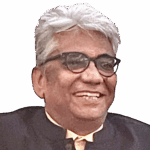 Anil Saxena is a retired Principal Chief Conservator of Forests and Head of Forest Force (HoFF), Maharashtra.
A lifelong nature lover and prolific reader, he brings depth, clarity, and insight to every book he reviews. As a Core Committee member of the Nagpur Book Club, he is known for his comprehensive reviews that make even complex subjects accessible and engaging.
Anil Saxena divides his time between Nagpur, Mumbai, and New York, enjoying the company of his children and grandchildren while continuing to explore the world of literature.