Book Review of Naukar Ki Kameez (नौकर की कमीज़), by Vinod Kumar Shukla (विनोद कुमार शुक्ल)

252 Pages, Hindi
Review by Anil Saxena
Vinod Kumar Shukla’s Naukar Ki Kameez is a remarkable Hindi novel that offers a glimpse into the early post-independence era of India. While the specific city and decade are not mentioned, the setting suggests the late 1950s or early 1960s.
Written in a style that borders on the surreal—what we may call magical realism—the novel blurs the line between past and present. As in the works of Gabriel García Márquez, characters appear and disappear without notice, and reality shifts constantly. But what Márquez does for Latin America, Shukla accomplishes uniquely in Hindi.
As the narrator himself says in one poignant line:
“कपड़े बदलने से आदमी बदल जाता है, और कभी-कभी तो कपड़े ही आदमी बन जाते हैं।”
(“Sometimes changing clothes changes the man, and sometimes the clothes themselves become the man.”)
The Protagonist and His Struggles
The narrator and main protagonist, presumably a low-ranking government clerk, lives a life of hand-to-mouth existence. Educated—probably a graduate—he nevertheless finds himself trapped in a poorly paid job. He has a mother and a wife, and his domestic responsibilities weigh heavily on his modest income.
The novel paints his life as a constant tightrope walk between self-respect and survival. His education, caste, and upbringing make him conscious of belonging to the white-collar middle class rather than the menial class, yet poverty constantly threatens to drag him downward.
A Story of Class and Survival
At its core, Naukar Ki Kameez is about poverty, deprivation, and the fragile façade of middle-class respectability. The novel shows how one wrong step can reduce a man to a menial status. Through sharp observations and restrained humor, Shukla reveals the silent cruelties of social hierarchy.
One striking reflection from the novel captures this:
“गरीबी एक ऐसी चीज़ है जो आदमी को उसके कपड़ों से पहले उतार देती है।”
(“Poverty is something that strips a man even before it strips his clothes.”)
The result is a story that is both grim and darkly humorous, where empathy for the protagonist emerges from the absurdities he endures.
Post-Independence Reality and Power Structures
Set in the early years of India’s independence, the book also critiques the grotesque persistence of colonial-era power structures. Government officials flaunt their authority with extravagance, while subordinates bow with obsequious deference. The republic may have been declared, but in Shukla’s telling, the babu–sahib culture remained unchanged.
The narrative reveals that the myth of sahib and memsahib was kept alive less by the rulers themselves and more by the bade babus and their groveling clans, who perpetuated the hierarchy with eagerness.
The Protagonist and His Wife
Both the protagonist and his wife are victims of abject poverty. Despite clinging to the belief that they are not of the menial class, circumstances repeatedly force them to cross that line. The hero often rebels against this reality, but just as quickly surrenders, rationalizing his actions as the only way to preserve his self-esteem.
This tragic cycle—rebellion, surrender, rationalization—is at the heart of the novel’s conflict.
Style and Themes
Vinod Kumar Shukla’s storytelling is lyrical and poetic, laced with biting sarcasm. He captures poverty, class hypocrisy, and the submissiveness of the lower classes in front of authority with piercing precision. At the same time, he shows how the same people become complicit in sustaining the very power structures that oppress them.
As one character wryly remarks:
“साहब की कुर्सी पर बैठना तो मुमकिन नहीं, पर उस कुर्सी की धूल झाड़ना भी एक तरह की इज़्ज़त है।”
(“It may not be possible to sit in the sahib’s chair, but even dusting that chair carries its own kind of dignity.”)
Why you should read it
Naukar Ki Kameez is not a conventional novel—it is different, unusual, and deeply engrossing. Those who appreciate the art of magical realism and enjoy variety in storytelling will find it immensely rewarding.
I, too, cherished reading it. For readers interested in the subtle intersections of poverty, class, dignity, and irony in post-independence India, Vinod Kumar Shukla’s masterpiece is a must-read.
My Verdict
Naukar ki Kameez is a lyrical, empathetic, and hauntingly humorous novel—one that lingers in memory long after you put it down.
Author Bio: Anil Saxena
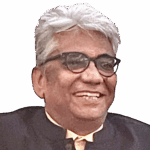 Anil Saxena is a retired Principal Chief Conservator of Forests and Head of Forest Force (HoFF), Maharashtra.
A lifelong nature lover and prolific reader, he brings depth, clarity, and insight to every book he reviews. As a Core Committee member of the Nagpur Book Club, he is known for his comprehensive reviews that make even complex subjects accessible and engaging.
Anil Saxena divides his time between Nagpur, Mumbai, and New York, enjoying the company of his children and grandchildren while continuing to explore the world of literature.