Book Review of ‘My Name Is Red’, by Orhan Pamuk.
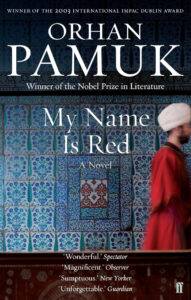 544 Pages | Buy Book
Review by Anil Saxena
A Masterpiece of Psychological Mystery and Artistic Debate
This remarkable 688-page psychological murder mystery set in medieval Turkey, penned by the 2006 Nobel Laureate in Literature, Orhan Pamuk, is a compelling page-turner in the “whodunit” thriller category. Set in the 16th century, during the time of Akbar’s reign in India, the novel transports readers into the world of miniaturists, illustrators, bookbinders, calligraphers, gilders, and portrait makers—a society steeped in Islamic orthodoxy, where women were treated as chattel.
A Murderer Who Speaks, a Victim Who Demands Justice
The novel opens in a highly unconventional manner—with a murdered man calling for justice. The killer, too, keeps appearing, offering cryptic monologues that reveal his motives and methods without revealing his identity.
Pamuk uses this structure to keep readers on edge while constructing a deeper philosophical and cultural commentary on Islamic art, personal identity, and societal hypocrisy.
Art and Faith: Between Image and Idolatry
In Islam, idolatry is prohibited. Yet, Islamic culture evolved a rich tradition of calligraphy, miniature painting, and manuscript illustration—especially depicting legends like Laila-Majnun, Shirin-Khusrau, and Rustam-Sohrab. These traditions coexisted uneasily with orthodoxy, which frowned even upon secular or non-religious imagery.
There existed constant tension between different schools of art: the Herat school with its idealistic, anonymous styles influenced by Plato’s notion of ideal forms, and the Ottoman tradition, which increasingly came into contact—and conflict—with Western (Franco-Venetian) art that emphasized individual perspective.
“A sign of individuality was considered a sin, a defect, and a blasphemy.”
Pamuk’s Portrayal of Desire, Power, and Hypocrisy
Pamuk subtly captures the passions and suppressed desires of men and women in an extremely patriarchal and orthodox society. Themes such as transvestism, pederasty, and concealed homosexuality appear—not as sensationalism, but as indicators of the hypocrisy and contradictions that exist beneath rigid moral facades.
The society depicted is one that hates diversity and individualism, believing both to be sins against the Quran and Allah. And yet, in the shadows, people long for love, beauty, art, and even forbidden freedom.
The Spectrum of Artistic Belief
The novel presents a vivid range of characters across a spectrum of artistic and ideological beliefs:
- Nusrat Hoja and his ilk, who view painting as an unpardonable blasphemy.
- The Herat school artists, influenced by Master Bihzad, who believed in illustrating what Allah would see—not what the individual sees.
- Master Osman, a conservative traditionalist.
- Enishte Effendi, a liberal who admired the Franco-Venetian style and encouraged experimentation.
“The Venetians painted not what the eyes of God see, but what their own eyes see.”
Between them are the Sufi dervishes (kalandars)—revelers in mysticism, intoxication, and union with God—looked down upon by the rigidly religious.
Art as Power, Art as Blasphemy
Pamuk offers a deep dive into the politics of art patronage, where conquerors commissioned artists to glorify their reigns, and artistic treasures changed hands with each imperial conquest.
A key plotline revolves around Sultan’s commission to Enishte Effendi to illustrate a book glorifying his achievements—with the final image being a portrait of himself, done in Western style. This act alone carries dangerous implications for all involved, as it borders on blasphemy.
Master Osman’s three protégés—Olive, Butterfly, and Stork—along with Elegant Effendi, a gifted gilder, are secretly involved in the illustrations. Each worked in isolation, unaware of the complete design. The blasphemous nature of the commission haunts them.
“Under the influence of Nusrat Hoja, the God-fearing Elegant Effendi was conflicted between faith and duty—and paid with his life.”
The same murderer who kills Elegant also eliminates Enishte Effendi. The quest to uncover the killer drives the central mystery forward.
Love, Longing, and Shekure
Running parallel to the murder mystery is a tender yet suspenseful love story. Black, a former apprentice and Enishte’s nephew, is hopelessly in love with Shekure, Enishte’s married daughter. She lives with her two sons in her father’s home. Her husband is presumed dead in war, but without confirmation, she is preyed upon by her possessive brother-in-law, Hasan.
Messages between Shekure and Black are carried by Eshthar, a fat, greedy, but sympathetic Jewish woman who plays all sides.
After Enishte’s murder, Black and Master Osman are given three days to solve the mystery—or face brutal torture themselves.
Magical Realism and Talking Objects
In a narrative brimming with magical realism, inanimate objects and animals—gold coins, Death, Satan, dogs, horses—even the color Red—speak to the reader, adding vibrant layers to Pamuk’s tapestry.
There are constant allusions to myths and legends like Shirin-Khusrau and Laila-Majnun, painted tirelessly by miniature artists across centuries.
Studios of master illustrators trained young artists, forbidding individual styles. Instead, the focus was on emulating the great masters—even at the cost of corporal punishment or sexual abuse.
“Another trait of great artists was the wish to go blind in later years… To draw not with the eyes, but with memory and the mind’s eye.”
Some artists even blinded themselves deliberately, believing their artistic memory would outlast their vision.
East vs. West: A Cultural Crossroads
Enishte Effendi, enamored with Western art, believed in subjectivity, perspective, and self-portraiture—ideas that contradicted orthodox Islam but resonated with Hindu philosophy’s maya, the illusion of the self.
The novel shows the inner turmoil of Ottoman artists torn between tradition and the inevitable pull of Western influence.
“They envied and hated the West, but in their hearts, they also wanted to emulate it.”
The Saga of Shekure: Women in a Man’s World
Beneath all the art and ideology lies a poignant portrayal of women’s status in a deeply patriarchal society. Shekure is enchantingly beautiful and loving, yet must rely on wit and cunning to navigate societal expectations, motherhood, and her desire for love.
Coffeehouses, Storytellers, and Social Undercurrents
Pamuk brings 16th-century Istanbul to life—its dusty bylanes, coffeehouses (which, despite being sacrilegious, thrived), and vibrant street culture. A transgender storyteller weaves fables of animals and objects, entertaining commoners and artists alike, until he is burnt alive by religious fanatics.
Pamuk’s Style: A Story Within Stories
The narrative is racy and gripping, though at times Pamuk risks losing readers in his labyrinth of stories within stories. Yet, he always returns in time to re-engage us with the central plot.
This novel is more than just a murder mystery. It is a brilliant mosaic of life, belief, hypocrisy, and transformation, told through the eyes of artists, lovers, and the lost.
Final Verdict
In the hands of a master storyteller, My Name is Red is a mind-boggling exploration of art, love, belief, and politics. It gives readers a window into the souls of artists and commoners alike in a city at the crossroads of tradition and transformation.
A must-read for lovers of historical fiction, philosophical musings, and gripping mysteries.
Author Bio: Anil Saxena
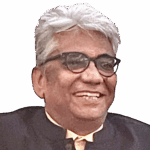 Anil Saxena is a retired Principal Chief Conservator of Forests and Head of Forest Force (HoFF), Maharashtra.
A lifelong nature lover and prolific reader, he brings depth, clarity, and insight to every book he reviews. As a Core Committee member of the Nagpur Book Club, he is known for his comprehensive reviews that make even complex subjects accessible and engaging.
Anil Saxena divides his time between Nagpur, Mumbai, and New York, enjoying the company of his children and grandchildren while continuing to explore the world of literature.