Book Review of ‘Meditations’, by Marcus Aurelius : A Guide to Living with Strength and Balance
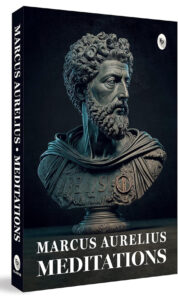 228 pages
Review by Rohit Tokhi
I first came across Stoicism through Ryan Holiday’s YouTube channel. His way of connecting ancient philosophy with modern life fascinated me. It didn’t feel like distant theory, it felt like practical advice you could use every single day. That curiosity led me to Marcus Aurelius’s Meditations.
Now, the book sits permanently on my desk. Every day, I open it and read a few pages. Some mornings it motivates me, some evenings it comforts me, and almost always it gives me advice on how to handle life’s struggles with patience and strength.
Who was Marcus Aurelius?
Marcus Aurelius (121–180 CE) was one of Rome’s greatest emperors. History remembers him as the “philosopher king”, a ruler who led armies, faced wars and plagues, and yet remained deeply thoughtful about how to live a good life. What makes Meditations special is that it was never meant for readers. These were Marcus’s private notes to himself, written mostly while on military campaigns, reminding him to stay disciplined, calm, and just.
The roots of Stoicism
Marcus was part of a long tradition of Stoic philosophers. Stoicism was founded in Athens around 300 BCE by Zeno of Citium, and its ideas were carried forward by thinkers like Seneca, Epictetus, and later Marcus Aurelius.
- Seneca wrote letters on how to use time wisely and live with courage.
- Epictetus, once a slave, taught that no one can control your mind unless you allow them to.
- Marcus Aurelius, the emperor, practiced these lessons daily while carrying the weight of an empire.
Together, they built a philosophy that teaches us to focus on what we can control, accept what we cannot, and live according to virtue.
Why Meditations feels different
Unlike Seneca or Epictetus, Marcus wasn’t writing to teach others. He was writing to himself. That is why Meditations feels so raw and direct. Some lines are strict, some are gentle, and many repeat the same lessons, as if he was drilling them into his own mind.
“You have power over your mind, not outside events. Realize this, and you will find strength.”
When I read these lines, I feel like I am looking over Marcus’s shoulder, hearing him wrestle with the same doubts, anger, and fears we all face.
My key learnings from the book
1. Focus on what you can control
We cannot control external events, but we can control our own thoughts and reactions.
“If you are distressed by anything external, the pain is not due to the thing itself, but to your estimate of it.”
2. Life is short – use it wisely
Marcus constantly reminds himself of life’s shortness, urging us to live with purpose.
“Do not act as if you had ten thousand years to throw away. Death stands at your elbow.”
3. Live for others, not just yourself
Kindness and justice are at the heart of a good life.
“Men exist for the sake of one another. Teach them then or bear with them.”
4. Accept change
Everything flows and changes. Peace comes when we accept nature’s cycles.
“Observe constantly that all things take place by change.”
5. Build inner strength
True happiness depends on the state of our mind, not on external things.
“The happiness of your life depends upon the quality of your thoughts.”
6. Do your duty without complaint
Marcus reminds himself to do his work and fulfill his responsibilities, no matter how tiring.
“At dawn, when you have trouble getting out of bed, tell yourself: I have to go to work – as a human being.”
7. Don’t fear death
For Marcus, death is natural and not something to fear. Remembering it helps us live more fully.
“It is not death that a man should fear, but he should fear never beginning to live.”
8. Forgive and tolerate others
People may act unfairly, but we can choose patience and understanding.
“Whenever you are offended at someone’s fault, turn to yourself and reflect: what are my faults?”
9. Stay humble
Even as emperor, Marcus reminded himself of his small place in the vast universe.
“Alexander the Great and his mule-driver both died, and the same thing happened to both.”
10. Live by virtue, not by fame or wealth
Wealth, status, and reputation fade quickly. Virtue is what lasts.
“Waste no more time arguing about what a good man should be. Be one.”
My personal experience
Since discovering Stoicism, I’ve found myself turning to it every day. Keeping Meditations on my desk has become a small ritual. I read a passage before starting work, or at night when my mind is restless. It steadies me, reminding me to focus on what I can control and let go of the rest.
Reading Marcus, alongside Seneca and Epictetus, feels like having three wise mentors guiding me. Seneca teaches me to use time well. Epictetus reminds me to guard my inner freedom. Marcus shows me how to carry responsibility without losing balance.
My verdict
Meditations is not a book you finish, it’s a book you live with. Each page offers timeless reminders: be patient, be just, accept change, and master your own mind.
“Waste no more time arguing about what a good man should be. Be one.”
My Rating: ★★★★★ – A lifelong companion. A book to return to every day for strength, clarity, and peace.
About the Author: Rohit Tokhi
 Rohit Tokhi is a Tech Entrepreneur, Web Developer, and co-founder of the Nagpur Book Club, as well as the Founder of the Nagpur Film Society. A lifelong reader and cinema enthusiast, he is equally passionate about sports administration and social work, having organized several community initiatives, including blood donation camps.
An avid bibliophile, Rohit often reads several books at a time and organizes monthly book meets that bring together hundreds of fellow readers. Through his expertise in digital marketing, he is dedicated to recognizing and giving exposure to talent in art, books, and culture.
Beyond his professional and social pursuits, he enjoys vegetarian cooking, exploring world cuisines, traveling, photography, and is an avid admirer of Vintage and Classic cars, Formula 1, and the art of motoring.