Book Review of ‘Kai Chand The Sar-e Asman’ (कई चाँद थे सर-ए-आसमान) by Shamsur Rahman Faruqi (शम्सुर रहमान फारुकी)
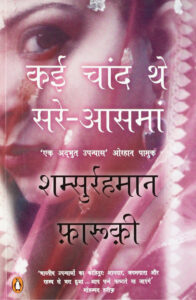
Review by Anil Saxena
“There are books that are written to tell a story, and then there are books that recreate a world. This is the latter.”
Shamsur Rahman Faruqi’s Kai Chand The Sar-e Asman (748 pages, published in 2006) is widely hailed as a modern classic of Urdu literature—comparable by many to Qurratulain Hyder’s River of Fire.
Though I do not claim deep expertise in Urdu literature, I find it difficult to believe that no other classics were written between 1959 (the year River of Fire appeared) and 2006. Leaving such polemics aside, this novel has undoubtedly enriched not only Urdu but also the larger corpus of Indian literature.
A Literary Tapestry Woven in History and Culture
This is modern periodical fiction crafted with deep historical awareness and sensitivity. It brings alive a world spanning from the late 18th century to the mid-19th, unfolding across the burning sands of Rajputana, the cool valleys of Kashmir, and finally the evocative, fading grandeur of Delhi under Bahadur Shah Zafar.
The narrative style evokes the rich oral storytelling tradition of kissa goi, enveloping the reader in a world of thrill, poetry, tragedy, and romance. Painstakingly researched, the novel also gives voice to the marginalized, standing up against royal and colonial power alike. Faruqi’s seamless blending of dialects and vernaculars with classical Urdu results in a language that is both “relishing and sweet.”
A World Immersed in Poetry
The novel is steeped in the lyrical wealth of Persian and Urdu poetry. Verses of Hafiz, Rumi, Saadi, Faizi, Meer Taqi Meer, Ghalib, Momin, Zauq, and Dagh Dehlvi appear like musical refrains throughout the book.
“Sher agar khoon na rulaye to kya faida” – Ghalib
(If a verse doesn’t make you weep blood, what use is it?)
Poetry is not just a backdrop; it is the soul of this novel.
Wazir Khanum: The Irresistible Protagonist
At the heart of the novel is Wazir Khanum, a woman of stunning beauty and fierce independence, born in the early 19th century and flourishing during the twilight of the Mughal Empire. Her choices in life and love are entirely her own—she lives on her own terms, defying the social norms of her time.
“If it is true that no man could dictate to her, it is also true that no man could remain unaffected by her charm; she was a seductress par excellence.”
Though she doesn’t appear until nearly 150 pages in, Wazir Khanum remains the novel’s gravitational center. Her life was a whirlwind of passion, loss, and reinvention, set against the backdrop of a decaying empire and rising British rule.
The Story Begins: A Picture, a Mystery, a Legacy
The narrative begins with Dr. Faruq, a dentist and amateur genealogist in London, encountering a photograph of a breathtakingly beautiful woman—his Anglo-Indian acquaintance claims she is his great-grandmother. Thus begins a literary investigation that draws the reader into a flashback-filled odyssey across generations.
Ancestral Echoes and the Birth of a Heroine
The tale meanders through the life of a Muslim miniature painter in 18th-century Kishangarh, who flees after painting a woman resembling the king’s daughter—a deed that leads to her death and his lifelong exile. His descendants become musicians and artisans, until finally one of them—raised by a courtesan—fathers Wazir Khanum.
Her beauty, intellect, and spirit draw a series of powerful men to her:
- Marston Blake, a British agent who made her his concubine and died in a skirmish.
- Nawab Shamsuddin of Loharu, a cultured Persian poetry lover who fathered her son, the legendary poet Dagh Dehlvi.
- Agha Turab Ali of Rampur, who married her and was later killed by thugs.
- Mirza Fakru, the third crown prince of Bahadur Shah Zafar, who gave her royal recognition, before his life was cut short by courtly intrigue.
Each chapter of her life is a chronicle of love, betrayal, loss, and resilience.
Women, Power, and Defiance
In a time when Muslim women had little autonomy, Wazir Khanum defied expectations. She read poetry, held her own in conversation, chose her lovers and husbands, and resisted being subdued.
“Domini,” a term sometimes used pejoratively in 19th-century Delhi, described women who boldly interacted with men and society on equal footing. Wazir Khanum was one such figure—bold, brilliant, unforgettable.
Other Remarkable Characters
While Wazir Khanum dominates the novel, the men around her also leave lasting impressions:
- Marston Blake, the romantic British officer who adored her.
- Nawab Shamsuddin, proud and poetic, who paid for love with his life.
- Dagh Dehlvi, the son who revered his mother, and became a literary icon.
A Meticulously Researched Historical Canvas
What truly distinguishes this novel is the staggering depth of historical detail. From the royal courts of Delhi to the artisans of Kashmir and Rajputana, Faruqi’s descriptions are encyclopedic in their accuracy.
The tools of chitere (brush-makers), the artistry of Kashmiri carpet weavers, the decadence of Mughal court life, and even the bathrooms of nobles—all are described with astonishing care.
Thrilling, Vivid, Unputdownable
The narrative pace is brisk, akin to a thriller. The reader is never bored as the plot twists through politics, poetry, espionage, love, and violence. Particularly gripping is the harrowing depiction of the thuggee cult—murderous bands of robbers and killers who ambushed travelers.
“The horrifying description of notorious thugs… gives you goosebumps.”
Hindu-Muslim Syncretism Subtly Woven In
Although the novel does not explicitly preach communal harmony, it shows a world where cultures were deeply intertwined. Muslim painters creating Radha-Krishna miniatures, or Wazir Khanum consulting a Hindu astrologer, reflect a society where religious lines were porous and shared traditions were the norm.
Language: The Ultimate Star
More than anything, this novel is a triumph of language. Urdu’s lyrical elegance is enhanced by local dialects from Rajputana and Kashmir. The result is musical, magical, and emotionally immersive.
“Still, the ultimate winner is the language.”
A Cinematic Masterpiece Waiting to Happen
This novel cries out to be adapted into a grand historical film. A visionary director, supported by a sensitive scriptwriter and a poetic soul like Shahryar, could turn this into another Umrao Jaan. But the bar is high—it needs the aesthetic integrity of Muzaffar Ali, the grace of Rekha, and the depth of Khayyam’s music.
English translation by the author
Shamsur Rahman Faruqi’s own English translation is titled The Mirror of Beauty, available on Amazon. The author, a giant in Urdu criticism, was also a retired officer of the Indian Postal Service.
Final take
This is not merely a novel; it is a finely embroidered garment of words, rich in detail and emotion, studded with the diamonds of poetry, the rubies of love, and the emeralds of historical memory. It is a book to cherish forever.
Author Bio: Anil Saxena
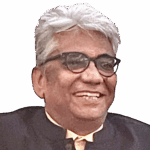 Anil Saxena is a retired Principal Chief Conservator of Forests and Head of Forest Force (HoFF), Maharashtra.
A lifelong nature lover and prolific reader, he brings depth, clarity, and insight to every book he reviews. As a Core Committee member of the Nagpur Book Club, he is known for his comprehensive reviews that make even complex subjects accessible and engaging.
Anil Saxena divides his time between Nagpur, Mumbai, and New York, enjoying the company of his children and grandchildren while continuing to explore the world of literature.