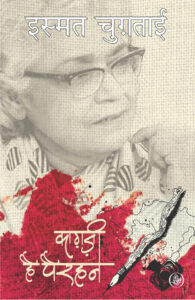
Review of the Book: ‘काग़ज़ी है पैरहन’ (Kagzi Hai Pairahan), by इस्मत चुगताई (Ismat Chughtai)
Review by Anil Saxena
Some time ago, I read a reference to ‘Kagzi Hai Pairahan’ from a post by one of my bibliophile friends. Ismat Chughtai, the author of this book, is a celebrated name in Urdu literature and is treated with the same reverence as Manto, Krishan Chander, etc. Later, in a Facebook post, I read an excerpt from the book about the court case launched against her for her short story, ‘Lihaaf’, which was deemed indecent and a threat to public morality.
This incident is from the pre-independence era. I was captivated by the spontaneous and self-effacing narration, infused with her unique brand of humor.
A Rare Hard Copy
I was prompted to buy the book on Amazon before a three-month trip to the US. Alongside many digital tomes on my devices, this was my sole hard copy possession, beating out several contenders. I read it in small parts every day, like a miser trying to prolong pleasure, or a diabetic eating their sweet-meat sparingly. I cherished and enjoyed every moment of the reading.
It is a misfortune not to be able to read masterpieces in the language they were originally written in. At the time, I couldn’t read Urdu script (now I can, but at a very halting pace); this was my handicap. The saving grace was that Urdu and Hindi are close sisters, and Urdu, when written in the Devanagari script, can still create the same magic. Therefore, I was able to derive the benefit of reading a khalis (pure) Urdu zubaan (language) in its most exotic and lyrical rendering in Devanagari.
A Lyrical Concoction
The book contains autobiographical essays or vignettes that depict interesting incidents from her life, along with pen portraits of several very lively and captivating characters. The author did not follow any chronology; she jumped from person to person and across different phases of her life with the ease of a trapeze artist, which has made the book a classic.
She had a long creative life, but this book depicts only her childhood, early adulthood, and educational experiences. There is no reference to post-independent India, so much so that, though she was married, we learn nothing about her suitor and life partner through the book.
As mentioned earlier, these pieces of memoirs from her different phases of life are strung together and expressed with rare forthrightness and are laced with the spontaneous humor that came so naturally to her. Added to her craft is a language that is Urdu mixed with a local dialect, which makes it a very lusty concoction.
Portraits of a Bygone Era
Even mundane subjects become alive with some unforgettable characters here in the book. Abba, the cool, magnanimous patriarch, was a government servant loyal to the British but who believed in social amity and inter-religious bonhomie. A devout Muslim from an era when the education of women was considered a sacrilege, he still allowed his daughter (reluctantly, of course, given the status of women in traditional Muslim families of the time) to study and stay in a boarding school. As Chughtai herself wrote:
“My father was an odd kind of person. He was very religious, but he never forced us to pray. He was a government officer, a big man, but he was very simple. He had no airs.”
Her ten siblings, their peculiarities, their pranks, and the exchange of witty repartee between them keep one enthralled. Her brothers, Munna Bhai, Nanhe Bhai, Shamim, and Azeem Bhai, all come alive through her deft pen. Amma, Badshahi Phuphi, and a host of other characters breathe life and sizzle throughout the text.
The lifestyle of a traditional middle-class Muslim family in the era of the 1920s to the 1940s is described with an inimitable equanimity and detachment. The tone of the entire book is non-condescending and is laced with an infectious humor throughout. As a writer, Chughtai was famously direct. Regarding the case against her story, she said:
“I don’t think there is anything indecent in the story, but I cannot deny that the story is not a piece of good writing, because it is just a plain description.”
The women remained in pitiable conditions in Muslim households of that era, but the main hero of the book remains the author herself, as she fought from her very early childhood to be treated on her own terms. Her one-upmanship and bickering with her brothers, her bold persona, her penchant for knowledge, and desire to get educated and broaden her horizons; her loathing of self-pity, mushy sentimentality, hypocrisy, and adverse public opinion; her gift of gab; her ability to trounce any opposition with her wit and vicious repartee; her ability to empathize with the sufferings of women and underdogs—all of this emerges beautifully here against the backdrop of a male-dominated and very traditional Muslim milieu of that bygone era.
The Doyen of Feminism
She was a doyen of women’s emancipation; she believed in the equality of the sexes and progressive relations between them, unconcerned by any opposition. Cosmopolitan in outlook, rigidity and bigotry of any sort—be it in religion or social affairs—were anathema to her. She was a feminist when the word itself had not yet been coined.
I bow before this strong-willed woman whose other writings were also much ahead of their times.
Final Verdict
It was a pleasure to read the book and I would highly recommend others to read it. This is a must-read for anyone interested in the history of Urdu literature, women’s writing, or the social and cultural history of pre-independence India.
Chughtai’s voice is unforgettable—candid, humorous, and fiercely honest. Kagzi Hai Pehran is a masterpiece of memoir, offering a personal glimpse into the making of a legendary literary figure. It is an essential read for those who appreciate fearless storytelling and a strong, unwavering spirit.
Author Bio: Anil Saxena
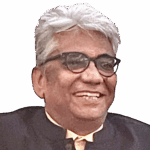 Anil Saxena is a retired Principal Chief Conservator of Forests and Head of Forest Force (HoFF), Maharashtra.
A lifelong nature lover and prolific reader, he brings depth, clarity, and insight to every book he reviews. As a Core Committee member of the Nagpur Book Club, he is known for his comprehensive reviews that make even complex subjects accessible and engaging.
Anil Saxena divides his time between Nagpur, Mumbai, and New York, enjoying the company of his children and grandchildren while continuing to explore the world of literature.