Book Review of ‘Before Memory Fades’, by Fali. S. Nariman.

460 pages
Review by Anil Saxena
The Legal Legacy of Fali S. Nariman
I recently found this book at my daughter’s place in Mumbai. I’d intended to read it for a long time but hadn’t had the chance. When the opportunity came, I couldn’t resist the temptation to delve into the life of one of India’s most prominent and highest-earning lawyers, a parliamentarian and Padma awardee who has been practicing law for over 72 years in the High Courts and Supreme Court of India.
He’s a man who has witnessed the era of the Internal Emergency and actively participated in the path-breaking, emancipating judgments of the Supreme Court in the cause of fundamental rights and the supremacy of the Constitution. He has been a champion of the liberty and freedom of citizens against the might of a powerful state. Yet, on the other hand, he also fought for Union Carbide in the Bhopal Gas Tragedy, which remains the deadliest man-made disaster in India. This earned him a great deal of notoriety. Overall, he has led a distinctly eventful life with an air of aplomb and not much regret, enjoying a Midas touch of success in both his professional and personal careers.
This 450-page memoir is brimming with a refined sense of humor, respect for his colleagues and seniors, and is frequently laced with an anecdote or two to bring a smile or a chuckle. He rarely undermines someone’s character or behavior, even when he disapproves of it, and he doesn’t fail to accept his own follies.
From Bombay to Delhi: A Storied Career
Starting his legal career in the Bombay High Court under the tutelage of the legendary Jamshedjee Kanga, he never looked back. He has the fondest memories of that era, when juniors would receive a “gold mohur” (valued at 15 rupees then) for preparing a complimentary brief. He describes the engravings on the Bombay High Court building, which depict both Victorian and Indian interpretations of the law. He narrates his rich experiences with mentors like Kanga, seniors such as Nani Palkhiwala and C. K. Daftari, and legends like M. C. Chagla, whom he considers an ideal and most considerate judge.
He later shifted to Delhi to practice in the Supreme Court, where he became an Additional Solicitor General of India and appeared in many cases for the Union of India. When Indira Gandhi declared the Internal Emergency, he resigned in protest and started his private practice, which he continues to this day.
One full chapter is devoted to the art and craft, the “dos and don’ts” of lawyering. Each of its 28 points is a valuable guide for young, aspiring advocates and lawyers. He does not hesitate to describe his own pitfalls for others to avoid.
Critiques, Landmark Judgements, and Personalities
In another chapter, he is quite critical of how the Inter-State Water Disputes Act of 1956 is interpreted and practiced, as it provides no satisfaction to any party. He understands the limitations of tribunals in devising an equitable apportionment of water between warring states and suggests that the Supreme Court should be the sole arbiter of all water disputes from the beginning.
Nariman comes into his own when he deals with the subject of the Emergency, highlighting the pusillanimity of a few judges and the glory and courage of even fewer judges who delivered landmark judgments like Golaknath (on the sanctity of fundamental rights) and Kesavananda Bharati (on the inviolability of the basic structure of the Constitution). These rulings saved the Constitution and democracy and thwarted the suspension of fundamental rights for all time to come.
While he generally avoids making personalized and adversarial attacks on the caliber and performance of judges, he singles out one Chief Justice of India, A. N. Ray—an acolyte of Indira Gandhi’s Congress—who superseded three judges to become the CJI. In his inimitable style, Nariman calls him “duplicitous and a rank opportunist.” It was Ray who chaired the infamous Supreme Court bench that gave the adverse verdict (6:1) in the Habeas Corpus case of ADM Jabalpur, in which the lone dissenter was Justice H. R. Khanna.
In his pique, he sums up Justice Ray’s personality with a scathing comment:
“He was always at his best when the going was good.”
Regarding the Emergency and its aftermath, he is of the opinion:
“One of the lessons of the Internal Emergency (of June 1975) was not to rely on constitutional functionaries. These functionaries failed us, ministers of government, members of Parliament, judges of Supreme Court, even the President of India.”
Nariman believes the fight for supremacy between the government and the judiciary will always remain and that both the judiciary and Parliament must remain vigilant about their thresholds and be careful not to infringe on each other’s domains.
The Bhopal Gas Tragedy and The Indian Express Case
In an important chapter on the Bhopal Gas Tragedy, perhaps the longest in the book, Nariman uses all his legal acumen to explain the case from his viewpoint as the lead solicitor for Union Carbide. He details how the compensation of $470 million was finally arrived at by the Supreme Court. He was heavily criticized for his role, with Upendra Baxi, a jurist and columnist of international repute, being one of his most vocal critics. Baxi wrote an open letter against Nariman in response to his article in the magazine Seminar, in which Nariman had discussed the case’s intricacies and possible remedies for future disasters. The exchange between the two legal luminaries was a captivating rally, a bit of a hit below the belt, leaving both sullied with some grime and muck. Nariman’s role in the Union Carbide case was controversial at best, if not condemnable altogether.
He earned his “brownie points” when he fought the Indian Express vs. Union of India case, an attempt to curb the freedom of the press and smother the might of the indomitable Ramnath Goenka, who stood like a colossus against the tyranny of Indira Gandhi’s government. Nariman is full of praise for Goenka, who fought like a lion and left a rich legacy of courage.
Admired Judges and Judicial Appointments
Nariman classifies judges into three categories: a legal-minded judge, a humanitarian judge, and an activist judge. He has a profound admiration for Justices Subba Rao and V. K. Krishna Iyer. Justice Subba Rao is remembered as a fierce protector of citizens’ rights and a vicious opponent of unbridled political power. The Golaknath case, in which he presided over a 6-5 verdict that placed a judicial check on unlimited constitutional power of amendment, remains a hallmark of his leadership. It was a prelude to other landmark judgments and helped restore people’s faith in the judiciary, allowing democracy to live another day.
Justice V. K. Krishna Iyer was a great humanitarian judge and a writer of “purple prose.” His concern for the downtrodden was legendary. His act of granting a limited stay to Indira Gandhi’s petition when she lost in the Allahabad High Court was an act of indomitable courage.
Nariman acknowledges the courage of Justice H. R. Khanna for his lone dissenting judgment in the famous ADM Jabalpur case. Justice Khanna’s bravery cost him the position of CJI, as he was superseded by the then-regime. However, his name remains etched in the annals of judicial verdicts and in the hearts of all Indians who cherish freedom of expression and dissent.
Another notable judge, Justice Hidayatullah, was known for his acumen, excellent sense of humor, erudition, and a gift for repartee. Nariman also praises Justices J. C. Shah, A. P. Sen, and Dhirubhai Desai, who was an activist and a very predictable judge.
As a word of caution, Nariman expresses discomfort with the idea of all judges behaving like Justices Krishna Iyer or Desai, in an “out and out” activist mode, as it would bring its own set of problems in dispensing justice. He understands the need for a proactive judiciary and judicial activism but simultaneously cautions against its unbridled interference in the domain of administration, believing in a “Lakshman-rekha” that must be respected by both the judiciary and the executive.
On the independence of the judiciary and the appointment of judges, he finds things went smoothly until the 1960s. However, after the Emergency, when Justice Ray became the CJI by superseding three senior-most judges, “alarm bells rang,” leading to the first, second, and third “Judges Cases.” In the last two judgments, the Supreme Court rejected the government’s authority in appointing judges and instead brought in the collegium system. Nariman is critical of this system and questions why only five senior-most judges should decide and not all sitting judges. He favors a more representative and democratic approach, like a National Judicial Commission (NJC), to avoid leaving such matters to a “coterie of a select few.” His arguments are difficult to dismiss, and the appointment of judges remains an unfinished agenda for the people of India.
A Parliamentarian and a Proud Indian
Nariman was nominated to the Rajya Sabha in 1999 by the Vajpayee government and remained a member until 2006. He found Parliament to be a place “full of sound and fury but of little substance.” Following the Gujarat riots, he advised L. K. Advani to form a Central Government’s judicial commission of inquiry, replacing the one formed by the Gujarat government, but his advice went unheeded. He was a regular attendee and actively participated in debates. He brought a private member’s bill to deny perks to agitating and absent members, but the bill failed. He also opposed the hike in salaries for members, but his voice again went unheard. To his lament, several bills that were passed and became acts were given short shrift by Parliament, which “let them die.” Overall, he spent an eventful and active time as a member and enjoyed his tenure.
In the evening of his life, he remains a contented, jolly, and endearing soul. As a proud member of an influential minority, he generously praises India, its secularism, its people, its variety, and its heritage. He finishes his book with a scintillating quote from Nehru’s Discovery of India.
My Verdict
This gripping book, an inexhaustible storehouse of information on our Constitution, laws, courts, judges, judgments, and public-spirited individuals, is a must-read not only for the legal fraternity but also for laymen and perceptive citizens of the country. A book not to be missed.
Author Bio: Anil Saxena
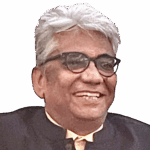 Anil Saxena is a retired Principal Chief Conservator of Forests and Head of Forest Force (HoFF), Maharashtra.
A lifelong nature lover and prolific reader, he brings depth, clarity, and insight to every book he reviews. As a Core Committee member of the Nagpur Book Club, he is known for his comprehensive reviews that make even complex subjects accessible and engaging.
Anil Saxena divides his time between Nagpur, Mumbai, and New York, enjoying the company of his children and grandchildren while continuing to explore the world of literature.