Book Review and Discussion: At the Existentialist Café, by Sarah Bakewell

448 pages
Review by Anil Saxena
Revisiting Existentialism
During my undergraduate years, I was introduced to the philosophies of Bertrand Russell, Ayn Rand, and, most fascinatingly, to the world of Existentialism. In the seventies in India, one would not be considered well-read if he or she didn’t have at least a nodding acquaintance with Marxism or Existentialism.
Owing to the influence of Russell, I never got attracted to Marx, but Sartre and Camus I always found thrillingly enticing. The image of squint-eyed Sartre, holding a cigarette amid clouds of smoke and chatting with his followers in the cafés of Paris, had a lasting impression on me.
His winning a Nobel Prize and then declining it—saying he “would prefer to accept a bag of potatoes rather than this prize”—made me even more inclined to read more of him and by him.
I read The Age of Reason, along with some of his biographies and other books on Existentialism, though I never dared to read his magnum opus Being and Nothingness. Gradually, I could understand the concept—sketchily though. So when I got hold of At the Existentialist Café, my interest in this philosophy was rekindled once again.
Understanding the Philosophical Background
Before going further, we must understand two very important concepts of the 19th and 20th centuries: Nihilism and Existentialism.
Both are atheistic philosophies born of the late 19th-century revolution, brought about by thinkers like Marx, Darwin, and Nietzsche.
A nihilist does not believe in any religion, ideology, or god. To build a new world, one has to annihilate whatever exists in the realm of ideas. When there is no God, there is no good, and then man is answerable to none—every act of evil is permitted if it leads to the establishment of a new order.
Fyodor Dostoyevsky vividly exposed this futility and moral vacuum in novels like Crime and Punishment, The Possessed, and The Brothers Karamazov.
Existentialism, too, does not believe in God—but unlike Nihilism, it considers man the supreme arbiter of his own fate. You alone are responsible for both your success and your failure—no other agency exists.
Essentialism vs. Existentialism
A beautiful example shows the difference between essentialism and existentialism.
In essentialism, like a carpenter knows the design and purpose of a knife before creating it, the essence precedes existence.
In existentialism, no one knows what the ideology or nature of an embryo (who will become a human being) will be. Man is free to create his own identity—and responsible for it too. You cannot blame “bad faith” later.
“Man is condemned to be free.” — Jean-Paul Sartre
“Existence precedes essence.” — Jean-Paul Sartre
This freedom is both a boon and a curse. Sometimes this freedom becomes too burdensome, and much of existentialist philosophy deals with that tension—between freedom and angst.
Phenomenology: The Foundation
Another important term in existentialist thought is phenomenology. While traditional philosophy deals with God, self, ethics, or right behavior, existentialism seeks to set all such questions aside and focus on how the individual perceives or understands the world around them.
Phenomenology is, in simplest words, the study of experience from the subjective point of view—the attempt to understand a phenomenon as it appears to consciousness.
“You are thrown into the world with no choice of your own. You are free to live, choose, understand, and interpret the world as you intend to.” — Jean-Paul Sartre
The Philosophers of the Café
Sarah Bakewell’s book brings to life not only these dense ideas but also the people behind them—their eccentricities, friendships, rivalries, and passions.
Søren Kierkegaard: The First Existentialist
Kierkegaard, the Danish philosopher, was the first to coin the word Existentialism. He asserted that you exist first, and then everything follows.
He discarded Descartes’ “I think, therefore I am”, and said instead that one exists before thinking—existence precedes reasoning. However, unlike later existentialists, he remained a theist and found solace in personal communication with the Christian God.
“Life can only be understood backwards; but it must be lived forwards.” — Kierkegaard
Edmund Husserl: The Philosopher of Experience
Husserl elaborated what phenomenology entails. He gave the vivid example of a steaming cup of coffee:
You can study its history—where the beans came from, how it was roasted, who served it—but for Husserl, that is all conjecture. What truly matters is your subjective experience: the smell, warmth, and taste of the coffee as you drink it.
He called this bracketing out of external factors Epoche.
Later in life, Husserl tended towards humanism, appreciating alien cultures and speaking for an integrated, cosmopolitan world. His works were smuggled out of Nazi Germany, inspiring French philosophers like Sartre and Merleau-Ponty.
Martin Heidegger: Dasein and the World
Martin Heidegger, though a Nazi sympathizer, was the most influential German philosopher after Husserl. His most famous work, Being and Time, introduced the term Dasein, meaning “being-in-the-world.”
He rejected Descartes’ dualism and proposed that man and world are inseparable. Only during a disruption—a crisis, an encounter with death—does this unity fracture.
“The hammer becomes invisible when used; only when it breaks do we realize its being.” — Heidegger
Heidegger admired ancient Greek thought and poetry, considering it “a clearing in the forest of Being.” He was also one of the first philosophers to raise concerns about technology and environmental degradation.
His meeting with Sartre, much anticipated, ended in disappointment.
Jean-Paul Sartre: The Philosopher of Freedom
Sartre was the shining knight of existentialist philosophy from the 1940s to the 1970s. During his peak, existentialism became synonymous with his name.
He and Simone de Beauvoir, his lifelong companion, were the toast of Parisian intellectual circles. Atheist and anarchist, Sartre believed:
“Man is nothing else but what he makes of himself.”
In Sartre’s universe, existence was “nauseating” and viscous until one gave it a purpose. Choiceless freedom, he said, brings immense pain—but also meaning.
He famously told a young man torn between joining the army and nursing his dying mother: there is no right choice, only your choice—and once you choose, you must bear full responsibility.
Bad Faith
Sartre’s concept of mauvaise foi or bad faith refers to the self-deception by which individuals deny their freedom. The burdens of race, religion, nationhood, patriarchy, caste, or class restrict one’s freedom and constitute bad faith.
“Freedom is what you do with what’s been done to you.” — Sartre
Purpose and Action
Only purpose gives meaning to existence. In Being and Nothingness, Sartre compares life to football—players aren’t kicking randomly; they aim for a goal.
Similarly, when you look for someone in a restaurant, their absence gives direction and purpose to your experience.
Freedom, therefore, means acting with full responsibility. During the Nazi occupation, Sartre joined the Resistance—finding, in that act, both freedom and purpose.
In his play The Flies, the hero kills his father, owns the act, and refuses divine help. That is true freedom.
The Man, the Rebel, and the Controversies
Sartre was often polemical and contradictory—an atheist who admired communism, a pacifist who endorsed violence against oppression. His break with Camus after The Rebel was infamous.
He rejected the Nobel Prize, saying the committee ignored writers from colonized nations. Despite his contradictions, he remained a humanist who “kept on looking at old ideas with a fresh eye.”
Albert Camus: The Philosopher of the Absurd
Albert Camus, born in Algeria, shared Sartre’s stage but differed profoundly in outlook. To Camus, life was absurd—without inherent meaning—but that absurdity was to be lived, not escaped.
“One must imagine Sisyphus happy.” — Camus
Camus believed in revolt, freedom, and passion—living moment to moment, embracing life without illusions.
His novel The Plague depicts a doctor battling an epidemic—a metaphor for moral perseverance.
His humanism made him oppose capital punishment, even for Nazis—putting him at odds with Sartre.
“I rebel—therefore we exist.” — Camus
Simone de Beauvoir: The Feminist Existentialist
Simone de Beauvoir, Sartre’s lifelong partner, was an existentialist thinker in her own right. Her groundbreaking work The Second Sex (1949) was hailed as revolutionary.
“One is not born, but rather becomes, a woman.” — de Beauvoir
She argued that women are conditioned from childhood to remain what patriarchal society wants them to be—objectified, confined to motherhood, denied full personhood. Over time, they internalize this conditioning, striving to look as men expect, reducing their being into nothingness.
Maurice Merleau-Ponty: The Gentle Phenomenologist
Merleau-Ponty, affectionately called the “dancing philosopher,” was a phenomenologist and cognitive psychologist. Disillusioned by Marxism, he emphasized perception as the bridge between self and world.
“My consciousness is a pit of my own—a tiny fold, a nest, a hollow for a time being—then it unfolds and becomes part of a greater whole.” — Merleau-Ponty
The Influence and Decline of Existentialism
Sartre, Camus, and Beauvoir became cult figures. Their ideas influenced film, theatre, psychology, and literature, and inspired movements—anti-war, anti-colonial, feminist, black liberation, and gay rights.
Writers like James Baldwin, Norman Mailer, and Iris Murdoch carried existentialist thought into the Anglophone world.
By the late 20th century, however, existentialism gave way to post-structuralism and postmodernism—to thinkers like Foucault and Derrida, who rejected extreme subjectivism. The focus shifted from individual meaning to structures of language, power, and culture.
As the 21st century dawned, new anxieties—climate change, AI, globalization, authoritarianism—replaced existential angst.
My Conclusion
An intelligently written book on a dense subject that would otherwise require volumes to grasp.
Sarah Bakewell’s narrative—filled with anecdotes, café scenes, and glimpses into the philosophers’ personal lives—keeps the text engaging without sacrificing depth.
Still, readers familiar with these thinkers will derive greater enjoyment.
At the Existentialist Café is for the curious few who wish to understand the inner workings of one of the most talked-about philosophies—and the minds that shaped the 20th century.
Appendix: Sartre’s Concepts of Being
- Being-in-itself: The mode of being that characterizes non-conscious entities—static, fixed, self-contained, and unaware.
- Being-for-itself: Conscious being, characteristic of humans—dynamic, incomplete, defined by freedom and self-creation.
In short, being-in-itself simply exists; being-for-itself creates itself through choice and action.
Author Bio: Anil Saxena
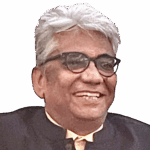 Anil Saxena is a retired Principal Chief Conservator of Forests and Head of Forest Force (HoFF), Maharashtra.
A lifelong nature lover and prolific reader, he brings depth, clarity, and insight to every book he reviews. As a Core Committee member of the Nagpur Book Club, he is known for his comprehensive reviews that make even complex subjects accessible and engaging.
Anil Saxena divides his time between Nagpur, Mumbai, and New York, enjoying the company of his children and grandchildren while continuing to explore the world of literature.