Triple Book Review – Animal Farm by George Orwell, Dr Zhivago by Boris Pasternak, and, The Master and Margarita by Mikhail Bulgakov.
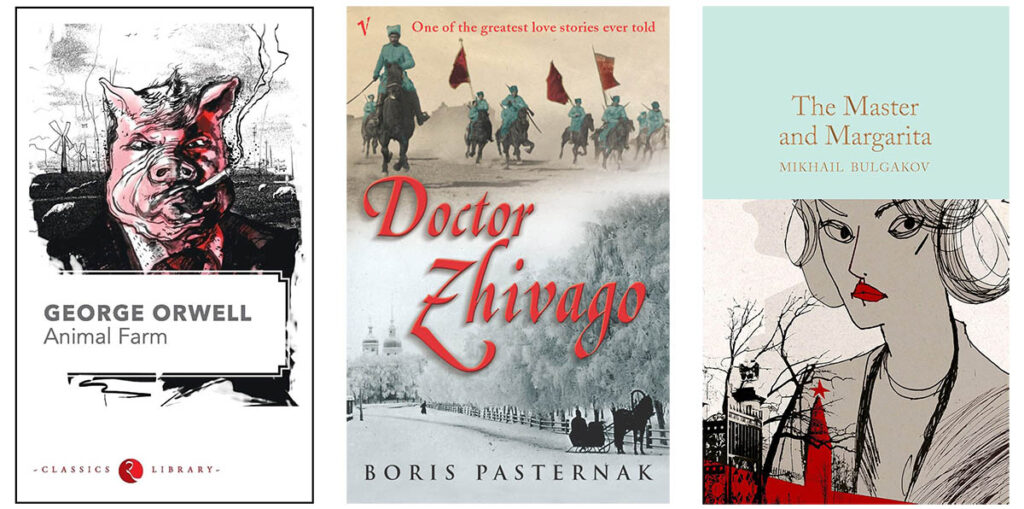
Review by Anil Saxena
Sometimes, just by coincidence, one ends up reading three books in succession which, although entirely different in their treatment, still take you to the same destination—making you laugh or cry at the absurdities of life, and reminding you of the timeless human feeling that nothing really changes in this world.
I am talking about Animal Farm by George Orwell, Doctor Zhivago by Boris Pasternak, and The Master and Margarita by Mikhail Bulgakov. I recently finished listening to their audio versions.
Through my comparative review below, I will try to highlight how each book, though unique, grapples with the failures of revolutions, the corruption of power, and the endurance of human love and faith.
Common Threads Among the Three Novels
-
They were all written during the decades of the 1930s and 1940s.
-
All of them are inspired, in one way or another, by the Russian Revolution gone wrong, and by totalitarian regimes—particularly that of Stalin.
-
Each depicts a deep disillusionment with a system that was once cherished and expected to be humanity’s great hope.
-
All three are alarmist in nature, serving as severe indictments of revolutions and totalitarianism in their own peculiar styles.
Here, however, the similarities end. Their treatment of subjects, tone, and story-lines differ from each other as chalk from cheese.
George Orwell and Animal Farm
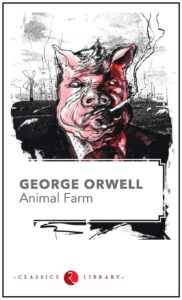
120 pages
About the Author
George Orwell (1903–1950), born Eric Arthur Blair, was a British writer, journalist, and critic best known for his sharp political allegories and deep concern for social justice. His works, including 1984 and Animal Farm, remain among the most influential commentaries on authoritarianism and the abuse of power.
The Novel
The smallest of the three, Animal Farm is a short, pithy, satirical novel written in the 1940s. Effortless to read yet deeply meaningful, it conveys its message through a burlesque spoof of how power corrupts. Today, it is often cited as the very essence of Orwell satire.
“One day in a farm of a British farmer, all the animals revolt and usurp power to govern their own affairs. Their leader, an ageing pig named Major, aided by fellow pigs Napoleon and Squealer, ousts the farmer and takes charge.”
The animals galvanize under the slogan:
“Two legs bad, four legs good.”
They even frame commandments and compose an anthem. At first, things seem happier, but soon the ugly nature of power manifests.
The Lessons of Animal Farm
-
Power always corrupts, and politics becomes the first refuge of scoundrels.
-
Those who overthrow tormentors often become tormentors themselves.
-
“All men are equal, but some are more equal than others.”
The chilling final lines remain unforgettable:
“The creatures outside looked from pig to man, and from man to pig, and from pig to man again; but already it was impossible to say which was which.”
The great truth Orwell exposes is universal for all past, present, and future totalitarian regimes.
I strongly recommend this book—not only for the sheer pleasure of its satire and imagination, but also because its subversive warning feels more urgent than ever.
Boris Pasternak and Doctor Zhivago
(512 pages)
About the Author
Boris Pasternak (1890–1960) was one of Russia’s greatest poets and novelists, deeply admired for his lyricism and spiritual depth. Though he gained international fame with Doctor Zhivago, he was persecuted in the Soviet Union, forced to decline the Nobel Prize for Literature in 1958 under government pressure. His work stands as both literature and testimony to the human cost of ideology.
The Novel
This is the serious, tragic saga of Yuri Zhivago, a sensitive physician, poet, and philosopher who lived through the early decades of 20th-century Russia. Born into a noble family but orphaned young, Yuri grows up admiring the Revolution, joins the army, and witnesses the collapse of his ideals.
As he reflects,
“Man is born to live, not to prepare for life.”
Zhivago soon realizes the fallacy of ideology—that revolutions reduce human beings to mere cogs in a vast machine. He sees through the hubris of ideologues who, ignorant of human complexity, attempt to design charters for humanity’s future. He laments the millions who suffer from the blunders of a few.
Doctor Zhivago shows how ideology suffocates the soul, turning even a poet and scientist into a pariah in his own homeland.
The Love Story
Despite his devotion to his wife and son, Zhivago cannot resist his love for Lara, a statuesque nurse. Their relationship, at once passionate and guilt-ridden, becomes his anchor in a collapsing world.
“You and I, it’s as though we have been taught to kiss in heaven and sent down to earth together.”
Circumstances eventually separate Yuri from both family and Lara. He dies an ignoble death, never realizing his true potential as a poet or even knowing he fathered a love child with Lara—whose identity emerges years later during World War II.
Why Zhivago Matters
Beyond the story of Yuri and Lara, Pasternak’s narration is poetic, lyrical, and deeply rooted in the Russian milieu. His descriptions of landscapes, flora, fauna, and seasons are as vivid as paintings. The train journey from Moscow to the Ural mountains, described with poetic imagery, makes you feel you are traveling beside Zhivago.
Written in the tradition of Pushkin and Turgenev, Doctor Zhivago won Pasternak the Nobel Prize in 1958, though the Soviet government forbade him to accept it. Zhivago’s character is considered Pasternak’s alter ego.
A classic document of a turbulent period in Russian history, it is a difficult but rewarding read.
Mikhail Bulgakov and The Master and Margarita
(432 pages)
About the Author
Mikhail Bulgakov (1891–1940) was a Russian novelist, playwright, and physician who lived under Stalin’s oppressive regime. Frequently censored and harassed, he nonetheless produced some of the most daringly imaginative works of 20th-century literature. The Master and Margarita, his masterpiece, was published only posthumously in 1967 and has since become a cult classic, celebrated for its blend of satire, fantasy, and philosophy.
The Novel
If Pasternak’s novel is straightforward tragedy, Bulgakov’s The Master and Margarita is dark comedy—a burlesque, satirical, surrealistic, and multi-layered masterpiece.
As Satan remarks in the novel:
“Manuscripts don’t burn.”
This phrase has become central to the Master and Margarita meaning, symbolizing the immortality of art and truth against censorship.
Three Interwoven Stories
-
Satan in Moscow – One day, Satan arrives with a retinue that includes a prankster cat. They wreak havoc through séances, tricks, and satirical spectacles, exposing the corruption and hypocrisy of Soviet bureaucracy and intellectuals.
-
The Master and Margarita – A writer (the Master) pens a novel about Jesus but burns it after harsh criticism. His beloved Margarita, aided by Satan, helps rescue the manuscript and ultimately redeems both of them in eternal peace.
-
Pontius Pilate and Jesus – In the Master’s novel, Pilate wants to save Jesus but fails. His guilt lingers for 2000 years until he finds redemption through the Master’s writing.
Themes and My Takeaways
-
Cowardice is humanity’s worst sin (exemplified by Pilate, and by Soviet intellectuals complicit in Stalin’s regime).
-
Good and evil are inseparable—“if one is the body, the other is the shadow.”
-
Ideologies cannot alter basic human fears, desires, and weaknesses.
-
Life’s absurdities often leave only one response—laughter.
With its surreal style, symbolism, and satire, The Master and Margarita is not an easy read. The Russian names can overwhelm, and the narrative at times feels absurd. Yet it remains one of the great cult novels of the 20th century, rewarding multiple readings.
Why These Stories Still Matter
Taken together, these three books reveal the follies of revolutions, the corruption of power, the endurance of love, and the absurdities of human existence.
-
Orwell shows how revolutions devour their children.
-
Pasternak captures the human soul crushed between history and desire.
-
Bulgakov ridicules totalitarian absurdity with surreal satire.
Each of these works, and the lessons in them – whether Orwell satire, Doctor Zhivago, Master and Margarita meaning – remain painfully relevant even today.
Author Bio: Anil Saxena
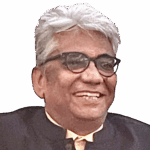 Anil Saxena is a retired Principal Chief Conservator of Forests and Head of Forest Force (HoFF), Maharashtra.
A lifelong nature lover and prolific reader, he brings depth, clarity, and insight to every book he reviews. As a Core Committee member of the Nagpur Book Club, he is known for his comprehensive reviews that make even complex subjects accessible and engaging.
Anil Saxena divides his time between Nagpur, Mumbai, and New York, enjoying the company of his children and grandchildren while continuing to explore the world of literature.