Between Faith and Reason: Understanding Kabir through Purushottam Agrawal’s ‘Kabir, Kabir’ and ‘Akath Kahani Prem Ki’.
Analysis by Anil Saxena
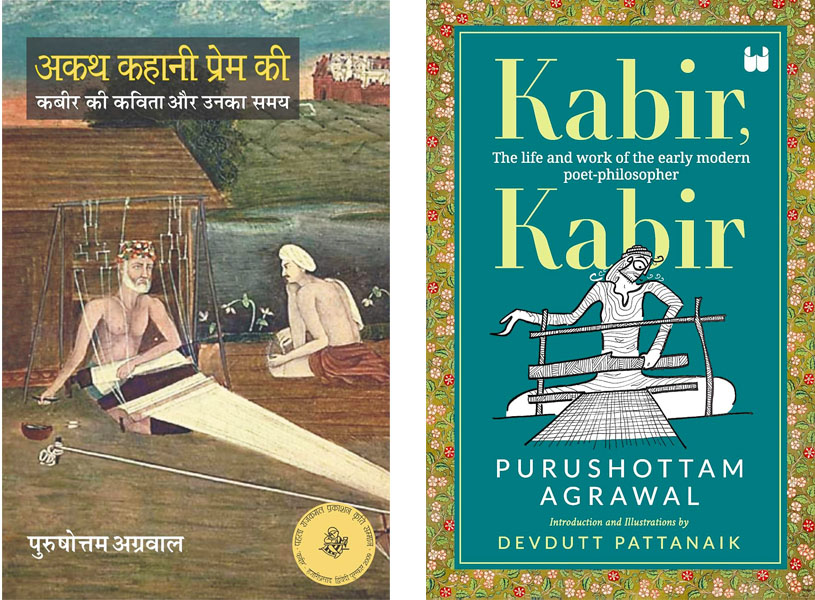
This monograph on Kabir is my attempt to understand what he stood for, through a review and brief introduction of two books written by Purushottam Agrawal: Kabir, Kabir in English (284 pages) and Akath Kahani Prem Ki in Hindi (456 pages). The effort has been to understand him through a process of catechism.
Kabir has fascinated me since my childhood and school days when we used to learn his verses by rote or write his ‘jeevani’ for board exams. His many verses are part of my life:
‘निन्दक नियरे राखिए’,
‘गुरु गोविंद दोऊ दोऊ खङे’,
‘पानी बीच मीन प्यासी’,
‘काकङ पाथर जोड़ के’
… and innumerable others still fascinate, jolt, and regale me by the sheer power of their unconventional content. I remain eager to learn about him from whatever source I can lay my hands on.
So, when I first got hold of ‘Akath Kahani Prem Ki: Kabir Ki Kavita Aur Unka Samay‘ by Purushottam Agrawal, I read it with utmost patience, despite its severe and dense literary Hindi and scholastic format. Still later, I was lucky to get hold of his English biography on Kabir with illustrations by Devdutt Pattanaik. If his Hindi version was informative and enlightening, his English one is a real gem; it not only educates and illuminates salient aspects of Kabir’s works and personality but also regales one with the easy fluidity of the text. Reading it was a sheer delight.
This monograph on Kabir, or whatever one may consider it, is mainly based upon the writings of Purushottam Agrawal with a few excerpts from others.
Historically, Kabir was born around 1398 CE and died around 1518 CE, giving him a legendary lifespan of 120 years. His life also coincides with the era of the Renaissance in the West. He was born into a family of Muslim weavers and became a disciple of Ramananda, a progenitor of the Ramanandi sect. Many folk tales are prevalent about his background, with some Hindu scholars believing that he was born to a Brahmin widow who, out of public shame, left him on the steps of the ghats, and he was rescued by Ramananda, who made him his disciple. Other tales are also prevalent, but Purushottam Agrawal is on firm footing about him being the son of a Muslim Julaha.
Who was Kabir?
Was he an iconoclast, a reformer, a rebel, a genius, a mystic, a saint, a poet, a Sufi, a Vedantist, or an ordinary weaver of Kashi? Or was he just an inquisitive, highly sensitive being who saw the world with open eyes and spoke fearlessly against organized religions, their hypocrisies, and the evil customs of society, all while containing a deep ocean of love and empathy for his fellow human beings and the supreme being?
Kabir’s Uniqueness and Core Philosophy
Purushottam Agrawal and many commentators find it extremely difficult to frame Kabir in any one category. He was a most stringent critic of organized religions and the clever maneuverings of the powerful and their hypocrisies. Namvar Singh termed his spiritualism as “empirical spiritualism,” or experience-based wisdom. He was a poet of आत्मख़बर (self-awareness), jivanmrit (dead while living), nij brahma vichar (one’s own spiritual quest), and nirvaiyaktik tatsthata (impersonal neutrality). He was a poet of the public sphere (lok sanskriti), seeking fair play and equity, and spiritualism beyond religions. Individual liberty, empathy, and rationalism all form the hallmark of his poetry. He never surrendered rationality at the doors of faith and religion. Simultaneously, he was a most vocal voice for, and believed in, human rights for all.
He didn’t believe in the Vedas, pilgrimages, Brahmin superiority, the Varna system, Manusmriti, fastings, shraddhas, or any tenets of Islam.
He might have been illiterate but had a keen insight into the intricacies of both Hindu and Muslim beliefs. He was a flag bearer of vernacular language against the scholastic writings of the Upanishads, Vedas, or the six systems of philosophies. He had a huge sense of self-esteem in being an ordinary weaver (a dastkar); his profession and family were as important to him as was his quest for the supreme. His object of worship, his Ram, was not a Dashrath Nandan Ram but an abstract cosmic consciousness that pervades all beings and the invisible yet invasive world. He had no interest in salvation (moksha) after life, but his bhakti was directed toward achieving moksha while living, and he called it a bhakti of jog and bhog. Though he was quite well aware of the Nath parampara, Sufism, and Tantrics, he also borrowed their language wherever he felt the necessity, but remained original in conceptualizing his thought process and expression.
The left-progressive intellectuals applaud him for his fierce iconoclasm and rebellion against the ill traditions of society and the dogmas of organized religion but failed to understand his deep mysticism and spiritualism. Simultaneously, rightist Hindus go overboard in establishing his Hindu connection, and both groups miss the elusive profundity of Kabir, who slips away from these binaries. He was a proponent of vernacular modernity (which was something unique in those times) that rested upon vivek (wisdom), sahajta (spontaneity), sahishnuta (tolerance), inquisitivity (jigyasa), samvedanshilta (sensitivity), and alochnatmak jigyasa (analytical curiosity). His ideal of bhakti was ‘Narada bhakti’.
Kabir considered the rituals of Hinduism and Islam great barriers to achieving spiritual solace and never minced his words to criticize both, and his questions are extremely hard-hitting.
‘भाई रे दो जगदीश कहाँ से आया, कहु कौने बौराया। अल्ला राम करीमा केसव, हरी हज़रत नाम धरायाll…’
Bhai re do jagadish kahan se aaya, kahu kaune bauraaya / Allah Ram Karima Keshav, Hari Hazrat naam dharaya
Bro, where did your two gods come from? Tell me, who made you mad? Allah, Ram, Karim, Keshav, Hari, Hazrat—so many names…
Kabir’s Rejection of Rigid Religion and His Own Spiritualism
Kabir, as long as he was living, didn’t propagate any cult or religion; it was only after his death that his followers formed a panth called ‘Kabir panth‘.
His Ram or Aradhya-dev was not any avatar but a supreme essence that pervades the universe. His spiritualism and bhakti were to attain self-actualization and introspection of his own soul in unity with the supreme. The love, spontaneity (sahaj bhav), discernment, and emotional bonding with all humans were other sides of his quest. His ideals were the Gopis of Vrindavan, whose love for Krishna was ultimate, but they did not adore him as a God but as a sakha (playmate). They would castigate, cajole, and fight with him on equal terms.
His approach was explicit and entails intense personal spirituality and social critique, always questioning the birth-determined hierarchy, insisting on rational proof of scriptural citations, and a natural corollary to all the above. In one of his verses, he challenges Brahmins.
‘तू बामहन मै कासी का जुलहा, बूझहु मोर गियाना। तुम तौ पाचे भूपति राजे हरी सो मोर धियाना।।’
Tu bamhan mai Kasi ka julaha, bujahu mor giyana / Tum tau pache bhupati raaje Hari so mor dhiyana)
If you are a Brahmin, then I’m no less. I am the weaver from Kashi and challenge you to explore my knowledge. You keep running after the kings and powerful; I am only concerned with Hari, with the divine.
He wore his greatness lightly, and needed just enough to be able to feed a saint along with himself:
साई एता दीजिये जामें कुटुम्ब समाए मैं भी भूका न रहूं, साधु न भूखा जाए।
Sai eta dijiye jaamen kutumb samaye / Main bhi bhukha na rahun, sadhu na bhukha jaye
Lord, give me only so much that my family is fed, that I don’t remain hungry, and a saint doesn’t go hungry.
His artha and kama were not mutually exclusive but complementary. His worship necessitates a respectful adjustment between his spirituality, family, and profession.
Kabir’s Allegory of the Blanket of Life
झीनी झीनी बीनी चदरिया / कबीर कबीर
झीनी झीनी बीनी चदरिया ॥
काहे कै ताना काहे कै भरनी, कौन तार से बीनी चदरिया ॥ १॥
इडा पिङ्गला ताना भरनी, सुखमन तार से बीनी चदरिया ॥ २॥
आठ कँवल दल चरखा डोलै, पाँच तत्त्व गुन तीनी चदरिया ॥ ३॥
साँ को सियत मास दस लागे, ठोंक ठोंक कै बीनी चदरिया ॥ ४॥
सो चादर सुर नर मुनि ओढी, ओढि कै मैली कीनी चदरिया ॥ ५॥
दास कबीर जतन करि ओढी, ज्यों कीं त्यों धर दीनी चदरिया ॥ ६॥
(Jhini jhini bini chadariya… / Kabeer)
The delicate blanket is woven fine. What is the warp, what is the weft, and with what thread is the blanket woven? Ida and Pingala are the warp and weft, the thread is Sushumna. The eight-petaled lotus is the spinning wheel, with five elements and three gunas the blanket is made. It took ten months to stitch the blanket, woven with great effort. That blanket was worn by gods, men, and sages, they wore and soiled the blanket. The servant Kabir wore it with care, and returned it just as it was.
Here, he describes the blanket of life, which is made of the five elements (earth, water, air, fire, and ether) and three gunas (sattva, rajas, and tamas). This blanket he wore with extreme care and rectitude. While other godly, wise, and pious men have dirtied the blanket of life, he has lived every moment with such care that he can face the Almighty and return the blanket just as new.
Kabir’s Centrality of Bhakti and Love
Elsewhere, he says:
‘भगति विमुख जे धर्म सो सब अधर्म करि गाए। योग यज्ञ व्रत दान भजन बिनु तुच्छ दिखाए॥ हिंदू तुरक प्रमान रमैनी सबदी साखी। पक्षपात नहिं बचन सबहिं के हित की भाखी॥ आरूढ़ दशा है जगत पै, मुख देखी नाहीं भनी। कबीर कानि राखी नहीं, वर्णाश्रम षट दर्शनी।’
Bhagti vimukh je dharam so sab adharam kari gae / Yog yajna vrat daan bhajan binu tuchh dikhae / Hindu Turak praman Ramaini Sabadi Sakhi / Pakshpaat nahi bachan sabahin ke hit ki bhakhi / Arudh dasha hai jagat pai, mukh dekhi nahin bhani / Kabir kani rakhi nahi, Varnashram shat darshani
Bhakti is the crux of all dharmas; rituals like yoga, yajna, fasting, and charity are pointless if they are bereft of bhakti. He speaks well of both Hindus and Muslims without any fear or favor in his verses; that is why he is respected by all. Kabir did not bother himself with the Varnashram or the six systems of philosophy.
To him, love stands supreme.
पिंजर प्रेम प्रकासिया, अंतरि भया उजास। मुखि कस्तूरी महमही, बाणी फूटी बास।।
Pinjar prem prakasia, antari bhaya ujaas / Mukhi kasturi mahamahi, baani phooti baas
Love has illuminated my body, my inner self has brightened, and my words now have the fragrance of musk.
कबीरा मन निर्मल भया जैसे गंगा नीर, पाछे-पाछे हरि खिलै कहत कबीर-कबीर।
Kabira man nirmal bhaya jaise Ganga neer / Pache-pache Hari khile kahat Kabir-Kabir
My mind has become as pure as the water of the Ganga, and Hari follows after me, playing and calling out “Kabir, Kabir.”
People talk of sahaj without ever knowing it; only those who can rid themselves of the compulsive, addictive habits of the mind can actually realize sahaj.
‘सहज सहज सब कोई कहै, सहज न चीन्हैं कोय |
जिन सहजै विषया तजै, सहज कहावै सोय ||’
Sahaj sahaj sab koi kahe, sahaj na chinhe koy / Jin sahaja vishaya taje, sahaj kahave soy
Everyone talks of sahaj, but no one knows what it is. The one who spontaneously gives up vices is the one who can be called a sahaj.
Kabir also used ‘Pak Parmanand‘, an Islamic name for divinity, along with Ram, Jagjivan, and other epithets.
Kabir’s Final Act of Subversion: Choosing Maghar
His subversive nature remained active throughout his life, and when he was about to die, he swam against the flow by leaving Kashi (every Hindu’s ultimate choice for death) to die in Maghar and exhorted others to follow him.
लोका मति के भोरा रे। जौ कासी तन तजै कबीरा, तौ रामहि कहाँ निहोरा रे॥ तब हम वैसे अब हम ऐसे, इहै जनम का लाहा। ज्यूं जल में जल पैसि न निकसै, यूँ ढूरि मिल्या जुलाहा॥ राम भगति परि जाकौ हित चित, ताकौ अचरज काहा। गुर प्रसाद साध की संगति, जग जीतें जाइ जुलाहा॥ कहै कबीर सुनहुं रे संतौ, भ्रंमि परे जिनी कोई। जस कासी तस मगहर ऊसर, हिरदै राम सति होई॥’
People lack sense! If dying in Kashi was sufficient for liberation, then why did Kabir invest so much in Ram? By this lifelong supplication, he has earned some profit by merging with God as water merges with water, and this is not incredible. Any sincere bhakt can achieve this with the help of a guru and the company of the pious. This weaver, thus armed, has vanquished the whole world. So dear ones, don’t be deluded; Maghar is no different than Kashi, for in your heart, Ram is the only truth.
It is curious to watch scholars of the past and present categorizing, measuring, and putting him under one sect or another—Muslim, Sufi, Nathpanthis, Advait, and so on—but Kabir remained too elusive to be branded; he defied all definitions of his bhakti.
It was much beyond the conception of the British, who were steeped in the rigid format of Christianity, to imagine that someone who was Muslim would flaunt his love of Advaitism and use Hindu expressions so freely. Muslims never considered him to be of their religion for his refusal to follow crucial precepts of Islam. Marxists are interested only in his rebellion against social hierarchy, caste, and the dogmas of organized religion but are blind to his extremely erotic and exotic poems invoking his love for the supreme.
Each has his own predisposition; Kabir remained out of all traps. Hazari Prasad Dwivedi, who considers Kabir the greatest poet in 1,000 years of the history of Indian poetry, believed him to be a Nathpanthi and named his unique form of worship as Dwait-advait-vilakshanvad. Acharya Ramchandra Shukla believed that Kabir’s worldview didn’t fit into the six systems of Hindu philosophy or Jainism and Buddhism. Dr. Namvar Singh termed his philosophy as ‘empirical rationalism‘.
But Kabir, sitting far apart from all this polemic, kept questioning that if only He exists, then how can one be a Dalit and untouchable and another so venerated?
Kabir’s Rejection of Pedantry
He avoided pedanticism and unnecessarily scholastic debates:
जन कबीर का सिषर घर, बाट सलैली सैल। पाँव न टिकै पपीलिका, लोगनि लादे बैल॥७॥
Jan Kabir ka sikhar ghar, baat salaili sail / Panv na tike papilika, logani lade bail
Kabir dwells in a high place, the way is too slippery even for ants, and some people want to negotiate it on a loaded bullock.
On death, he says:
गोरख अटके कालपुर। कौन कहावे साहू ||
Gorakh atke kalpur / Kaun kahave saahu
Death is inevitable; even Gorakh died, so who is the winner?
गोरख रसिया जोग के। मुए न जारी देह।। मास गली माटी मिली। कोरी मांझी देह।।
Gorakh rasiya jog ke / Mue na jari deh / Maas gali maati mili / Kori manji deh
Gorakh was a yoga connoisseur. His body was not cremated after death, but his flesh rotted and mixed with the dust. He polished his body for nothing.
Such trenchant verses penetrate like a bullet.
जो तु बाॅभन बाॅभनी जाया, आन बाट हृवै काहे नहीं आया?
जो तु तुरक तुरकनी जाया, भीतर खतना काहे ना कराया।
कहे कबीर मधिम नही कोई, सो मधिम जा मुखि राम न होयी।
Jo tu bamhan bamhani jaya, aan baat hrvai kahe nahi aaya / Jo tu Turak Turakani jaya, bhitar khatna kahe na karaya / Kahe Kabir madhim nahi koi, so madhim ja mukhi Ram na hoyi)
If you were born of a Brahmin, then why have you not chosen a purer way of being born? If you are so proud of being Muslim, why were you not circumcised in the womb itself? Kabir says that no one is inferior by birth. Those who are inferior are those whose mouths do not utter Ram.
‘मन उलटया दरिया मिल्या लागा मालि मलि न्हान। थाहत थाह न आवई तूं पूरा रहिमान||
Man ulataya dariya milya laga maali mali nhan / Thahat thah na aavai tu poora rahimaan)
Revert to your inner self to rediscover the adventure of your spiritual quest, which, like an ocean, knows no limits, and be grateful to the merciful God.
To Brahmins, he says:
ब्राह्मण गुरु जगत का, साधू का गुरु नाँहि, उरझि पुरझि करि मरि रह्या, चारों वेदाँ माहिं।
Brahman guru jagat ka, sadhu ka guru naahin / Urajhi purjhi kari mari rahya, charon Vedan maahin)
The Brahmin is the world’s guru; he is not the guru of the righteous. Entangled in the tangle of the four Vedas, he is dead and lost.
To a Qazi, he says:
काजी तुम कौन किताब बखानी | झंकत बकत रहो निसी बासर, मति एकौ नहिं जानी||
Kaji tum kaun kitab bakhani / Jhankat bakat raho nisi basar, mati ekau nahi jani
Qazi, what books are you lecturing on? You babble all day and night, yet you have not known a single original thought.
Was Kabir a Product of His Times? Vernacular Modernity
The author is of the opinion that, though Kabir’s reach, expression, and understanding of the nuances of society and spiritualism are phenomenal and original, he was a product of his times. The age to which he belonged was also undergoing a cultural renaissance, and Kabir too took the benefit of his predecessors like Namdev, Raidas, Pipa, and Dhanna in expressing himself freely on the matters of this world and the other world. Later, his contemporaries and successors like Akbar, Abul Fazal, and Tukaram were known for their syncretism and enlightened views on the matters of spiritualism. So, to be what Kabir was, was a Mijaz e Zamana (spirit of the age).
Regarding the modernity of Kabir and his contemporaries, the author is of the opinion that the concept of modernity is a European construct. Europe started valuing modernity with the emergence of a new understanding about this world during their Renaissance period, but he believes that modernity can simultaneously emerge among distant cultures and societies with no connection between them. So, modernity was quite possible in India too, though it was still in the medieval era.
To understand whether Kabir was modern or not, one should first look into the precepts of modernity.
Modernity entails:
a) skepticism;
b) being wary of accepting irrational prejudices;
c) being wary of accepting unjust social structures as divine rights;
d) judging human beings not according to their birth but upon their deeds;
e) expressing one’s opinions and writings not in ancient classical languages but in vernacular.
With this test, who can doubt the modernity of Kabir? In Europe, instead of Latin and Greek, poets, thinkers, and scientists preferred writing in their respective languages. Shakespeare and Thomas More wrote in English, Rabelais in French, Martin Luther in German, and Dante in local Tuscan. In contemporary India also, almost all bhakti poets wrote in their own languages. Surdas wrote in Braj, Tulsidas in ‘Avadhi’, Kabir in suddhakkadi/panchmel, and Raidas, Vishnudas, and Shankar Dev all wrote not in Sanskrit but in respective Braj, Avadhi, and other local languages.
The Renaissance in Europe coincided with the advent of Kabir and his contemporaries in India. There, Martin Luther was at the forefront of his Protestant movement against the corrupt, decadent, and authoritarian papacy in Catholicism, as it mandatorily required the presence of an intermediary (priest and church) between the ordinary seeker and God. He revolted against this tyranny and established a new sect to facilitate direct communion of common men with the Almighty.
The fact is, Europe, which boasts its Renaissance, also rediscovered itself with the help of Arabs. It was Arabs who not only provided them their almost lost Grecian and Roman heritage (thoughts and writings of Socrates, Plato, and others), which were lost when Greece was taken over by the Byzantine Empire. Not to forget, they got the decimal system and zero, double-entry bookkeeping, and astronomy from India, and the art of paper-making and printing from China.
Moreover, this Renaissance had its ugly side too. It led to industrialization and then to urbanization, colonization, imperialism, and the exploitation of non-European societies all over until the mid-20th century or so. During those days, alongside enlightenment, it witnessed horrible violence. Protestants burned Catholics and Jews at the stake and destroyed their books, and vice versa.
The Inquisition was an order of the day. Such examples of religious intolerance can be seen until the mid-20th century. In Britain, notorious ‘anti-blasphemy law’ and anti-witchcraft acts were abolished only in 1951. Slavery continued in England until 1807. In America, despite the ‘Emancipation Proclamation‘ for blacks by Lincoln in 1864, blacks were being lynched regularly even then.
Against this backdrop in Europe, Indian society was relatively peaceful because, firstly, there was no central authority like a church to regulate society, and secondly, they had learned to live with diversity for ages.
Tulsidas was the proponent of sagun worship, a status quoist, an upholder of Vedic supremacy, Vaishnavism, the Varna system, and the prominence of Brahmins in all affairs of life. Against that, Kabir was a worshipper of ‘Nirguna‘, and was poles apart from Tulsidas in all respects, yet there was no bloody, gory rivalry. In fact, in the padavali of Surdas, published in that era, one finds Kabir’s verses too. There may have been an intellectual and ideological war between them. Still, there was no call for the inquisition of rivals; each one had their followers, and each one had his own space to thrive.
How British Colonists Misunderstood Kabir’s India
When the British came to India, they not only had their grounding in a very restrictive and rigid religion of the single book, but they also had a baggage of preconceived notions about natives and suffered from their complex of ‘the white man’s burden‘ to educate, reform, enlighten, and convert them to their own religion, because they had a pride in the superiority of their own religion over others. Given their iron-cast separation of Protestantism and Catholicism, it was beyond their comprehension that the Muslim Kabir could ever talk of Ram and Keshav and follow the grammar of poetry which was seeped into the intricate symbols of Hinduism. Secondly, their native informants, mainly Brahmins and people of high castes who had their own axe to grind, were successful in selling to the British the understanding that India and Hinduism could only be understood through Sanskrit, Vedas, Upanishads, Gita, Manusmriti, and the Puranas.
The British wrongly perceived through the prisms of these native informants the sacrosanctity of the Varna system, the rigidity of castes, and Manusmriti, though there was a very large majority of the population which lay beyond the tutelage of these so-called tenets of Hinduism and the rigidity of caste. The Varna system was not as stern as was made to be believed by these vested interests.
The British, their administrators, and scholars like Max Weber had the following notions about India:
- Hindu society was highly caste-ridden, and there was a perceptible rivalry and hatred among Hindus and Muslims towards each other.
- India was always governed by oriental despots who, instead of public welfare, always looked after their own interests.
- The key to understanding this civilization, which had passed its prime long ago, lies in knowledge of Sanskrit, Persian, and all ancient texts.
- India had never outgrown its jajmani (priest and ruler) culture and never had a proto-capitalist structure (mercantilism) to lead to industrialization and capitalism.
- Their primitive trade, strict caste hierarchy, untouchability, and the practice of sati would never allow India to become modern like Europe.
Contradicting the above, the author says that it never came to their comprehension that there could also be a possibility of vernacular modernity on the lines of Europe during the medieval period in India. For them, there was no possibility of originality among vernacular poets except for rehashing Sanskrit texts.
They were also carried away by Risley’s racial theory of Aryan invasion and had developed a notion that there was no possibility of rational discourse in this frozen civilization, as it lacked historical memory, social negotiation, and a concept of a public sphere altogether. Weber wrongly interpreted that, as India and China lacked Protestant ethics, there was a very remote chance for them to get industrialized.
The Protestant ethics entailed:
- disenchantment with the existing order,
- desacralization,
- vernacularization,
- individuality,
- rationality,
- commerce, industrialization, and urbanization, with man becoming a master of his own fate.
It was believed that Hindus were scared of going on sea voyages, while the reverse is more true. Throughout history, merchants from the south and Orissa have traveled far and wide to Cairo, Astrakhan in Russia, in the west, and Bali, Vietnam, and Cambodia. There are records of Indian merchants being settled in Cairo and purifying the Volga by pouring a bit of Ganga water into it.
Still, these notions suited both the British and native informants, and the prejudice of one fed the prejudice of the other. With this lame understanding of Indian society, the British considered themselves God’s gift to the natives and indulged in framing laws and undertaking unprecedented reforms in education and other spheres to govern India better.
Indian scholars like Tapan Raychaudhuri too did not fare any better in assessing India. He believed that though there was a large commercial sector available along with the market credit structure and a vibrant domestic/overseas market, the country of the 18th and 19th centuries, with no scientific revival and with stagnant agriculture and industry, was no better than when Marco Polo visited in medieval times.
Kabir’s India: A Prosperous and Flexible Society
In 1700 CE, India’s share of global GDP was 24.43%. Indian society was a vibrant, mercantile society; traders were traveling across seas to sell their wares and surprisingly were not ostracized, as became the custom in the 19th century. By 1800, China, the Mughals, Iran, and the Ottomans were more powerful economically than Europe, and their subjects were also better treated by the so-called oriental despots.
Hundi, dadni, and traditional banking systems were well established in India then. Fernand Braudel identified capital formation, trading, middleman systems, banking, usury, and craftsmanship (dastkari) in that age in India.
The author is of the view that Kabir, Tukaram, and Akbar belong to the realm of modernity. Unlike the British, Mughals didn’t suffer from the white man’s burden and understood India not by reading ancient texts but by daily contact with the local population and didn’t take money elsewhere. After the Mughals, the protection to Indian craftsmen declined, and that resulted in a loss of global GDP share from 24% in 1700 to 4% in 1952.
It is said that Mughals destroyed temples, and there is no gainsaying that, but simultaneously, they respected scholarship too. Akbar had the Mahabharata translated and had the highest regard for Kabir. The Hindu-Muslim camaraderie was alien to the rigid-minded British, who were steeped in the tradition of monotheism and Puritanism.
The society and caste system, too, were not that rigid. Dharmashastra was also not sacrosanct and was open to interpretations. Vernacular voices, which were quite vocal and vibrant, were not much concerned with the pettyfogging of Brahmin scholars. The four-fold Varnashram was an abstract model, while the caste system was a variegated reality. For example, in Mitakshara Brahman, they were categorized into 10 grades like shudra brahmin, mlecch brahmin, chandal, and nishad, etc. Kings had the power to elevate adherents of lower castes to higher ones, and the role of money and power many times would decide the caste of a person. Celebrated kings like Hemu and Harshavardhana were Baniyas. In Khilji’s times, Yadavas were reigning kings.
Muslims were undergoing yog sadhna. Sheik Farid and Sheik Nagori were yog sadhaks. Some of them were not loyal to the tenets of Islam but were still respected by Muslims. Kabir was a dastkar (artisan) and was quite proud about it. The Puranas were appropriated to propagate subaltern views against Brahmins. In the 16th century, Oriya poet Bakrishna Das wrote Laxmi Puran. A Muslim tailor, Dariya Saheb, from Bihar wrote his own version of the Ramayan named Gyan Ratan on the lines of Tulsidas. Hindus and Muslims in Kabir’s time were slated to live together, ensconced in mutually profitable relationships. Artisans and merchants both survived and grew together.
The author opines that the illusion of unchanging, unchallenged tradition is a British construct. Modernity always emerges from tradition. The British plundered India, they drained its wealth, enterprise, and self-esteem, and made Indians rudderless in their thinking.
Before the Raj, 15% of Indians were living in cities and urban centers. Agra, Delhi, Murshidabad, Vijaynagar, and Dhaka used to glitter with opulence then. In the British Raj, most of the Indians retreated to rural areas. Amartya Sen’s account of the apathy and neglect shown by the British during the mostly man-made famines in 1876, 1896-97, 1899-1900, and the most devastating one of the 1940s leaves no doubt in the mind of every independent observer of the immorality, selfishness, and cruelty of the British towards their subjects.
Kabir and His Contemporaries: Nirgun vs. Sagun Bhakti
Namdev, Raidas were Kabir’s predecessors. Kabir and Namdev belonged to the artisan class, while Raidas was a chamar, and all of them were quite proud of their profession. Nanak belonged to the merchant class; Banarasi Das Jain belonged to the business community. Tukaram was a shudra by caste but a Vaishya by profession. Tulsidas, another very great poet, and Surdas were worshippers of sagun bhakti. They were status quoists, devoted to sagun bhakti in the light of the Vedas, the Varna system, and the supremacy of Brahmins, and were severely critical of nirgun bhakti. Tulsidas’s Ram is an avatar of Vishnu, an embodiment of righteousness and moral truth. Tulsidas, with all of his might, tried to undermine nirgun bhakti, yet Kabir stood like a colossus, unperturbed, and continued with what he felt was right. Even today, Kabir and Tulsidas stand like two giant peaks of Hindi literature and inspire their followers.
Kabir’s Poetry: Essence, Impiety, and Nonconformism
One can see the beauty of symbolism here:
ये जग आंध्ला जैसे अंधी गाई व, बछङा सो मर गया उभी चाम चटाई।।
Ye jag aandhla jaise andhi gai va, bachhra so mar gaya ubhi chaam chatai
This world is blind, like a blind cow whose calf has died, yet it licks the hide.
Kabir might have been illiterate, but this family man was a polymath and was a master of oral tradition. His poetry is of the public sphere, social injustice, basic respect for human values, empathy, and body and mind swap (parkayapravesh). He doesn’t talk about something esoteric but touches the life of flesh and blood of our surrounding world. His saga is that of a small artisan who earns his living by sheer efforts and simultaneously gets elevated to a heightened spiritualism; it was well-grounded and transcendental both.
Although a perfect wordsmith and being called a dictator of language by Hazari Prasad Dwivedi, he did not run after adornment but expressed himself with common words, usages, and slang to get it branded as Saddhukkdi and panchmel. His poetry speaks the language of rebellion against the hypocrisies of organized religions and evokes social consciousness that desires social justice.
Hazari Prasad Dwivedi states that the expression of the abstract through words is the greatest exhibition of poetic abilities. In the case of Kabir, the modes of expression, like all tools of poetry, become secondary or a byproduct of the thought he wanted to convey.
He not only critically examines the emotionally lived life but looks beyond it also. Almost all expressions of life—pleasure, desire, memories, sensibilities, fears, jealousies, lust, pain, appeasement, and peeving—make a veritable collage in his poetry. Almost all expressions of love find a place in his poetry. If he lived life with all his physicality, he had the guts to look death eyeball-to-eyeball too. He desired moksha while living only.
Kabir does not spare himself even:
अपनै विचारि असावरी कीजै। सहज के पाइङै पांव जब दीजै दे मुहरा लगाम पहिराऊं। सिकली जीन गगन दौराऊं,। चल वैकुण्ठ तोहे लै तारुं। थकहि तो प्रेम ताजनैं मारुं।।
Apnai vichari asavari kije / Sahaj ke paide panv jab dije / De muhara lagaam pahiraun / Sikali jeen gagan dauraun / Chal vaikunth tohe lai tarun / Thake to prem tajane marun
Consider riding yourself. When you put your foot on the saddle of spontaneity, I will put a bridle and a rein on you. I will gallop the saddle to the heavens. Come, I will take you to Vaikuntha. If you get tired, I will whip you with love.
He is asking his mind to remain loyal to sahaj (spontaneity) and wisdom; if it does not, then it may be thrashed by the whip of love.
To his followers, he warns:
साखी सबदी गावत भूले |आतम खबर नहीं जाना।
Sakhi sabadi gaavat bhoole / Aatam khabar nahi jana
You sing the sakhi and sabadi just perfunctorily, and forget to grope and understand your heart.
Moksha lies in living in the presence of death. Death is all-pervasive, but still, we live as if it will never come to us.
Kabir’s Ulat Basiyaan (Absurd Verses)
The poetry of Kabir also contains some puzzling, even absurd, verses called Ulat Basiyaan. These were not a result of some abnormality but were a conscious effort to challenge the rigidity and intellectual lethargy of his followers. He wanted to shake them up from their dogmatic slumber to explore life and spirituality anew. The world to him was the truth, but it was not the complete truth; it had to be seen from the lens of both lokik (worldly) and alokik (spiritual).
Some scholars believe that the Nathpanthi Yogis were the first to use this kind of language. For example:
‘बरसै कंबल भीजै पानी’
Barsai kambal bhijai pani
The blanket is raining, and the water is getting wet.
This has a deep mystical meaning. The mundane world is reversed to show that one needs to go inward to achieve salvation, and not outward. The senses are the biggest hindrance to salvation and need to be subdued by spiritual practices.
Kabir’s Diverse Following
Kabir had a wide range of followers, and his appeal was universal, not limited to a few groups. His disciples came from all sects and castes. For example, Pipa and Baghel were kings; Sarvajeet was a Brahmin. He was also revered by Nathpanthis, Vaishnavas, and Sikhs. In Chhattisgarh, Baniyas adopted the Kabirpanth. Paltu Charan Das was a Baniya; Radhaswami, Nanak, and Raidas were all staunch opponents of the caste system and considered themselves to be casteless.
The Myth of Kabir vs. The Man
Myths and legends are an essential part of any civilization. They are not a part of history but are part of the early growth period of any mature civilization and provide nourishment to the present generation. The psychological myth theory states how myths are based on human emotion and come from the human subconscious mind. Cultures all around the world had similar fears, questions, and wishes that were unexplainable to them. They may appear illogical and unscientific to many, but they speak a lot about the culture they represent. For example, Hanuman climbing the sea, or Jesus serving more than 100 hungry persons with just five loaves and two fishes, are acts that are not to be accepted literally but to be understood by the nuanced faith and commitment they convey. Almost all great men and women have myths associated with them.
Kabir’s favorite disciple, Anant, who was from the Rasik branch of Ramanandi sadhus and considered himself as a woman to Ram, waxes lyrical about Kabir, Namdev, Pipa, and Raidas. Anantdas describes that after Kabir’s death, a fight ensued between Hindus and Muslims to cremate or bury him. While they were fighting, they entered the room and found no Kabir, but just thirty-two measures of flowers. Half of the flowers were buried, and half were burnt.
बोझ बतिस का फूल मंगाया | तलैं उपर सैन कराया ||
सब संतन मिल नाचैं गावैं| ,ताल पाखावज संख बजावैं ||
अमर भयों छुटयौ ना सरीरु| भयो सैदेंही दास कबीरु||
भगतन मांझ अचंभौ भइया| फूल देखि अपने घर गइया ||
Unfortunately, his own followers failed him, reducing him to the same binaries he fought against throughout his life. Anantdas also tells how his antagonists hated his popularity among the masses, so they tried to trap him in a honey trap and went to Sultan Ibrahim Lodi to feed him lies about Kabir. The Sultan called Kabir and tried to kill him by several methods, but the legend is that Kabir came out unscathed from every ordeal.
The Poignant Paradox in Kabir’s View of Women
Kabir didn’t trust women. For him, they were the greatest impediments on the way of sadhus in attaining success in their goals of worship. Here he appears as an unabashed misogynist and deserves criticism for his blinkered approach toward women. His description of women as a pit of hell shows his own insecurities, limitations, and failures to control his own libido. No modern critic can accept his position on women. The author has also pointed out, and so well, that male nirgun bhakts, though they have gone overboard in condemning women, none of the women saints like Meera have ever considered males an obstruction to their spiritualism. This tells us amply where the fault lies.
परनारि का राचणौं, जिसी लहसण की खानि। खूणैं बैसि र खाइए, परगट होइ दिवानि॥2॥
A desirable woman is like a cobra; only those with Ram’s love can be saved. She is bound to devour the rest.
कामिणी काली नागणी तीन्यूं लोक मझांरि| राम स्नेही ऊबरे,विषयी खाए झारि||
Still, the same Kabir considers himself a beloved (bahuriya) of his God and writes some of the most exotic and erotic verses where he becomes a woman and expresses his desires to be united with his beloved husband. Examples of some of his verses are as under:
वै दिन कब आवेगें माई| जा करनी हम देह धरी है ,मिलिबौ अंग लगाई हाँ जानूं हिल मिल खेलूं,तन मन प्रांन समाइ| या कामना करौ परिपूरन समरथ हौ राम राई||
Kabir, in his female persona, expresses erotic desire without any inhibitions. Awaiting the arrival of her beloved, she imagines that he will embrace her, and she is ready to embrace him to get total satisfaction and would surrender to him in totality.
Love in Kabir’s poetry is like an invisible Saraswati in Sangam that remains invisible beneath the Ganga and Jamuna. These poems are both erotic and spiritual.
The pleasure has reached my mind through my body. Ram, the groom, came in a marriage procession of five elements. My desire to meet him is brimming over.
तन रत कर मैं मन रत करिहूं,पंचतत्व बाराती | राम देव मोरे पाहुने आए हैं ,मैं जोबन मैमाती||
Destined to end life, burning in separation, neither can I come to you, nor can I call out to you.
आय न सकूं तुझ पै,सकूं न तुझ बुलाई | जियरा यूं ही लेओगे,बिरहा तपाई तपाई||
Here he says, beloved come to me, my body hurts, everyone says that I’m your woman but unless I sleep with you how can it be called an affection?
बाल्हा आब हमारे गेह रे, तुम बिन दुखिया देह रे | सब कोई कहें तुम्हारी नारी, मोकों एह संदेह रे| एकमेव ह्वे सेज न सोंवे तब लगि कैसा नेह रे|
Authentic Sources of Kabir’s Literature
Kabir Granthawali is considered the most authentic source of Kabir’s literature. It contains 809 sakhis and 403 padas from Dadu-panthi manuscripts, and 192 sakhis and 222 padas from Adigranth. Scholar Callewant took 10 manuscripts of Kabir’s works between 1570-1681 and identified 48 poems as the most authentic. The Granthawali was not a monochromatic text; it criticizes sectarian religions, hypocrisies, the Varna system, and also indulges in nari ninda (condemnation of women). His Ulat Basiyaan also became very popular. Purushottam Agrawal exemplifies the composite culture of that age when he found Kabir’s Bijak and verses from Granthawali with padas of Surdas in one volume only.
The Enduring Legacy of Kabir
These works by Purushottam Agrawal serve as an invaluable guide in understanding a figure who transcends simplistic labels. My review, in turn, attempts to effectively highlight how Kabir’s teachings—on love, personal truth, and questioning authority—are not just historical but profoundly modern.
Author Bio: Anil Saxena
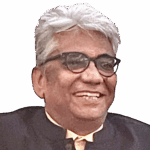 Anil Saxena is a retired Principal Chief Conservator of Forests and Head of Forest Force (HoFF), Maharashtra.
A lifelong nature lover and prolific reader, he brings depth, clarity, and insight to every book he reviews. As a Core Committee member of the Nagpur Book Club, he is known for his comprehensive reviews that make even complex subjects accessible and engaging.
Anil Saxena divides his time between Nagpur, Mumbai, and New York, enjoying the company of his children and grandchildren while continuing to explore the world of literature.