Book Review of ‘A Gentleman in Moscow’, by Amor Towles.
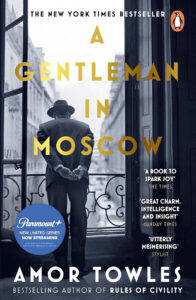
512 pages
Review by Anil Saxena
An Enduring Saga of Grace
“The first was that if one does not master one’s circumstances, one is bound to be mastered by them; and the second was Montaigne’s maxim that the surest sign of wisdom is constant cheerfulness.”
A Gentleman in Moscow by Amor Towles is one of the best-selling books of the last decade and has been recommended by the likes of Bill Gates and Barack Obama. It’s no wonder, given that it’s a delightful saga of Count Alexander Ilyich Rostov, a Russian aristocrat who, from 1922 to 1954, is put under house arrest in the opulent Hotel Metropol in Moscow.
I just finished listening to the audiobook version, and it tells a story of the 30 years of acquaintances he developed, the life he lived, the relationships he nurtured, and the experiences and wisdom he acquired through his exemplary composure and cheerful nature. It’s not that he didn’t face setbacks, but these never undermined his inner wisdom or his quest for happiness.
A Portrait of a Perfect Gentleman
Count Alexander Ilyich Rostov is the perfect gentleman and fits the definition of French essayist Montaigne to a T. Coincidentally, Montaigne’s essays provide a perfect pastime for the Count during his idle hours. It’s fascinating to watch an aristocrat, who was accustomed to a life of grand opulence in France, choose to return to the turbulence of the Russian Revolution, knowing he would be hounded like a vermin. The novel doesn’t explicitly state what forced the Count to return to Russia, but it was his love for his own soil, his roots, its essence, its golden literature, its people, and his own ingrained patriotism that made him return to suffer house arrest. He loved Russia but didn’t wear his patriotism on his sleeve.
“For what matters in life is not whether we receive a round of applause; what matters is whether we have the courage to venture forth despite the uncertainty of acclaim.”
As the story revolves around the Count, it’s worth understanding who he was and what he stood for:
- He was an excellent marksman, a master horseman, a polymath, and incredibly well-read. He could offer a tip on prime numbers or speak on Zeno, Locke, and Socrates until the cows came home, yet he was still a perfect ladies’ man.
- He remained unflappable when he was thrown out of his luxury suite into a 10×10-foot, dingy hole with a window the size of a chessboard. There, he could only take the bare essentials, a few precious books, his grandfather’s clock, and a very necessary amount of gold hidden inside a table, a lifeline in a crisis.
- A man who had not only lived a life of unimaginable luxury and rubbed shoulders with the crème de la crème of society was equally at home with butlers, concierges, plumbers, waiters, porters, chefs, sous-chefs, and maîtres d’, sharing the joy of camaraderie. A connoisseur of the best of European cuisines, wines, and liquors, he was equally excited to share honey-spread black toasted bread and steaming coffee with a lowly plumber.
- A perfect raconteur of anecdotes and tales, he was a delightful conversationalist who could cast his spell on even the most diehard cynics. His keen, watchful eyes wouldn’t miss even the slightest discrepancy in a table setting in the restaurant. The hotel staff often sought his advice on seating arrangements for conceited Soviet-era bureaucrats to avoid skirmishes among them.
With these virtues, he soon became a sought-after man and a man in a crisis. We gradually discover that he was no longer an amateur giving tidbits of advice to the staff but had become a headwaiter of the Metropol and a member of the triumvirate—consisting of the Chef, the maître d’, and the headwaiter—that decided the menus, seating arrangements, and organization of big parties for high-ranking commissars and foreign diplomats.
Here was a man who was superbly adjusted to the changing Russian society, its new value system, and its etiquette, one who bore all his ordeals in the most imperturbable manner. He was neither a revolutionary nor a subversive activist, nor even an antagonist. But he would be ready to go to any extent if his honor was questioned or if there was the slightest threat to his loved ones, and then his ruthlessness knew no bounds.
“By the smallest of one’s actions, one can restore some sense of order to the world.”
A Cast of Characters and The Soviet Regime
Besides the Count, this novel has much more to offer. It features a host of characters who come and go as the story progresses. There is Nina Kulikova, whom the Count saw grow from a precocious 13-year-old to a committed apparatchik and a mother of a 6-year-old girl who becomes a pariah, serving a sentence in Siberia. His childhood poet friend, Mishka, also suffered when his independent spirit and love of literature came into conflict with the system, earning him eight years of hard labor and then an anonymous death.
The Count also forms a friendship with Osip Ivanovich, a high-ranking commissar who grows very fond of him on account of the Count’s cosmopolitanism and erudition. Osip was keen to learn about America as Russia grew in size, stature, and power. Acquaintance with the Count led him to enjoy American movies, especially those of Humphrey Bogart.
Then came his adopted daughter, Sofia, who was brought to him by Nina. Nina left her with him to serve the sentence in Siberia with her husband. As days turned into years, Nina didn’t return, and Sofia became her “papa’s” darling. She gradually became the pivot around whom the Count’s life now revolved. She grew up to be a gorgeous woman and an accomplished pianist. There was also Anna Urbanova, a charming, willowy actress who fell for his charm and became his lifelong friend and alter ego. Not everyone loved and admired the Count, however. The manager of the Metropol, Bishop, was an ambitious upstart who, through proximity to influential bureaucrats, unseated many in the hotel hierarchy and rose to become the boss. This petty-minded man loathed the Count’s guts and constantly looked for an opportunity to pin him down.
More Things Change, More They Stay the Same
Though the novel is set in Soviet Russia and the life it depicts belongs inside the Hotel Metropol, it couldn’t remain impervious to the happenings in the society outside. It beautifully describes how the more things change, the more they remain the same. The aristocracy was replaced by the hierarchy of commissars and army generals. The bemedaled chests, sequins, spangles, and shoulder pads of royalty were replaced by the epaulets, insignias, and ribbons of the Soviet Red Army. Counts and dukes were gone, but these new aristocrats, both high and petty bureaucrats and army officers, had a liking for the same delicate food, wine, and extravagance. They were prone to the same one-upmanship and clashes of ego. Consequently, the Metropol continued with its splendor and gaiety despite the revolution.
To give an example, the glittering and widely scorned furniture of the aristocratic era became kosher for the use of the new mandarins once it became state property and had a label to that effect.
“If a man does not master his circumstances, then he is doomed to be mastered by them.”
If Stalin sneezed, the whole government-run media and party apparatchiks would get a cold. Editorials would be written for and against an issue based on the Supremo’s public frowns, smiles, and gestures. Mishka was asked to remove a passage from an anthology of Chekhov’s letters where he had praised the bread he had eaten in Berlin, as it was considered spiteful to Russian bread and would whet the appetites of ordinary Russians for foreign bread. Some overzealous bureaucrat ordered the removal of all labels from one of the most expensive and vintage wines in the cellar to end class discrimination. The book is replete with such hilarious incidents.
“We drink not to escape life, but for life not to escape us.”
Then there was a hideous and abominable side to the regime, when committed and most loyal communists like Mishka and Nina were sent to the gulag or exterminated for unknown reasons. The book narrates that in the zeal to remove kulaks from agriculture, the effort to modernize it was affected because the ordinary peasants lacked the initiative and skill to modernize, resulting in a drop in grain production and a big famine that followed. To keep the famine a secret from foreign media during their train visits to the countryside and from their own countrymen, the windows of the trains were blackened so no one could see the devastating conditions.
My Verdict
The best thing about this book is that it shuns pedanticism and is racy and gripping from the first page to the last. The book has many cross-references to philosophical anecdotes, but these tidbits, instead of scorching one, provide the glow and warmth of a fireplace on a wintery night. The descriptions of the hubbub and humdrum of one of the busiest hotels in Moscow, its restaurant (Boyarsky), and its Chaliapin Bar, where the wafting aroma of delectable cuisines and the savor of vintage wines never fail to come alive in its text. The author of the book seems to be enamored by Humphrey Bogart and his classic Casablanca, and there is a connection between the book and the film, but for that, you will have to watch the movie and read the novel.
“Looking back, it seems to me that there are two kinds of time: there is the time of the clock…and then there is the time of the heart.”
This feel-good novel was a sheer pleasure to read.
P.S. Since I found out that there is a series on the novel being run on Showtime, I was keen to watch it. Yesterday, I learned it’s available on Amazon Prime. So, I watched its pilot episode (they have not put the entire series on the platform). It may be too early, or it may be that the notion of the characters and the story’s setup in my imagination didn’t match the director’s idea, but I found the first episode insipid, uninspiring, and not at all glittering. The dim visuals might reflect the original lighting system of a bygone era, but I fell asleep for a good 5-6 minutes while it ran.
Author Bio: Anil Saxena
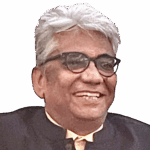 Anil Saxena is a retired Principal Chief Conservator of Forests and Head of Forest Force (HoFF), Maharashtra.
A lifelong nature lover and prolific reader, he brings depth, clarity, and insight to every book he reviews. As a Core Committee member of the Nagpur Book Club, he is known for his comprehensive reviews that make even complex subjects accessible and engaging.
Anil Saxena divides his time between Nagpur, Mumbai, and New York, enjoying the company of his children and grandchildren while continuing to explore the world of literature.